
★ Trusted since 2006Open 7 days a week, 7:00 AM–9:00 PM
★ Trusted since 2006Open 7 days a week, 7:00 AM–9:00 PM

★ Chimney Inspections
Chimney Inspections in South Florida
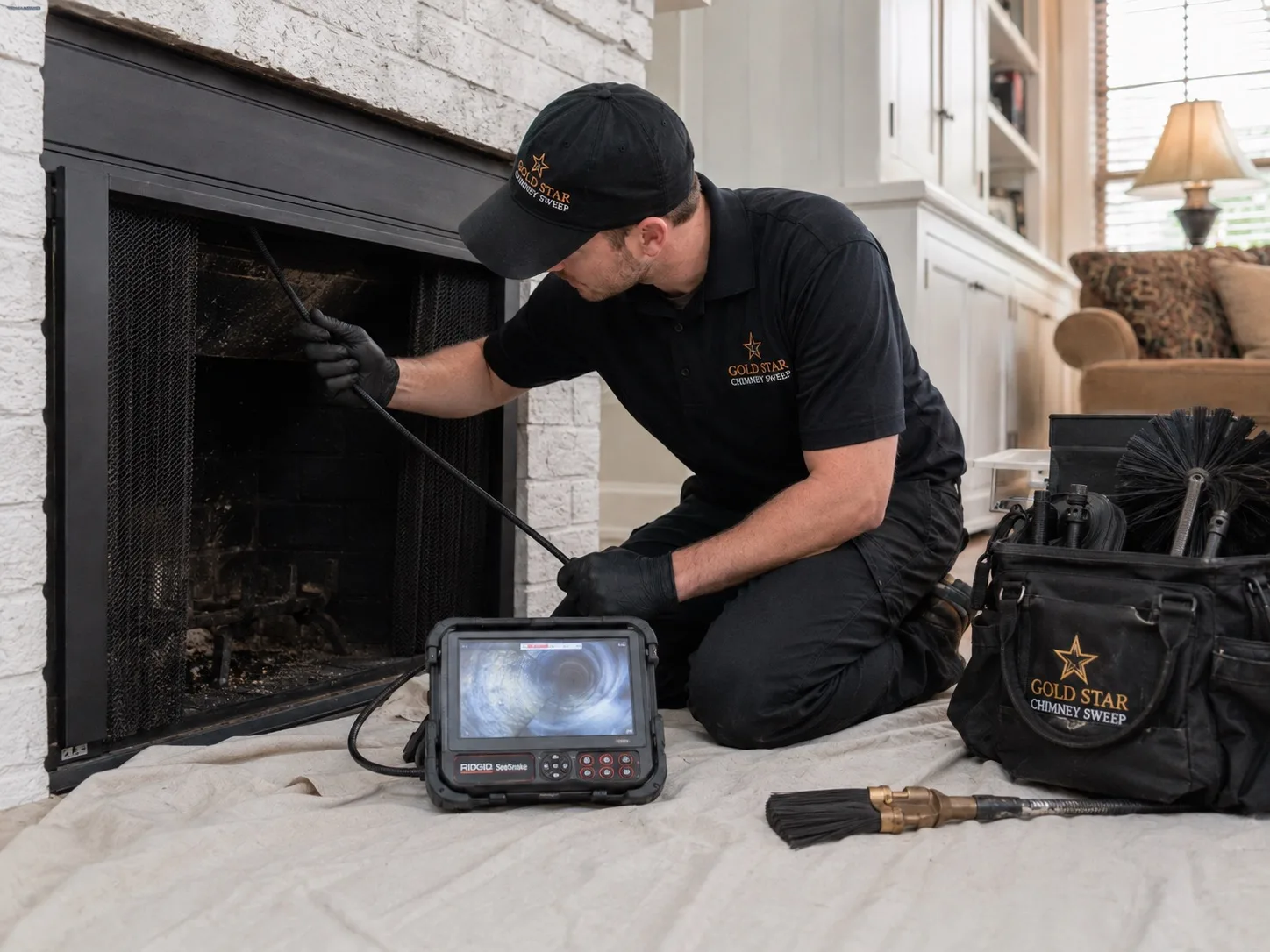
An inspection tells you the condition of a system you cannot see. It is the step that decides whether you need a cleaning, a repair, or nothing at all.
★ Overview
What chimney inspection actually involves
NFPA 211, the national standard for chimneys, fireplaces, vents, and solid-fuel-burning appliances, calls for chimneys to be inspected at least once a year, with cleaning and repairs done as needed. That order matters: inspect first, then act on what is found.
Since 2000, NFPA 211 has defined three inspection levels with specific scopes. Level 1 is the routine annual check of readily accessible areas. Level 2 adds attics, crawl spaces, basements, clearance to combustibles, and a video scan of the flue interior, and is the correct level after a property sale, a chimney fire, an appliance or fuel change, or a severe weather event. Level 3 involves opening up concealed areas and is reserved for suspected hidden hazards.
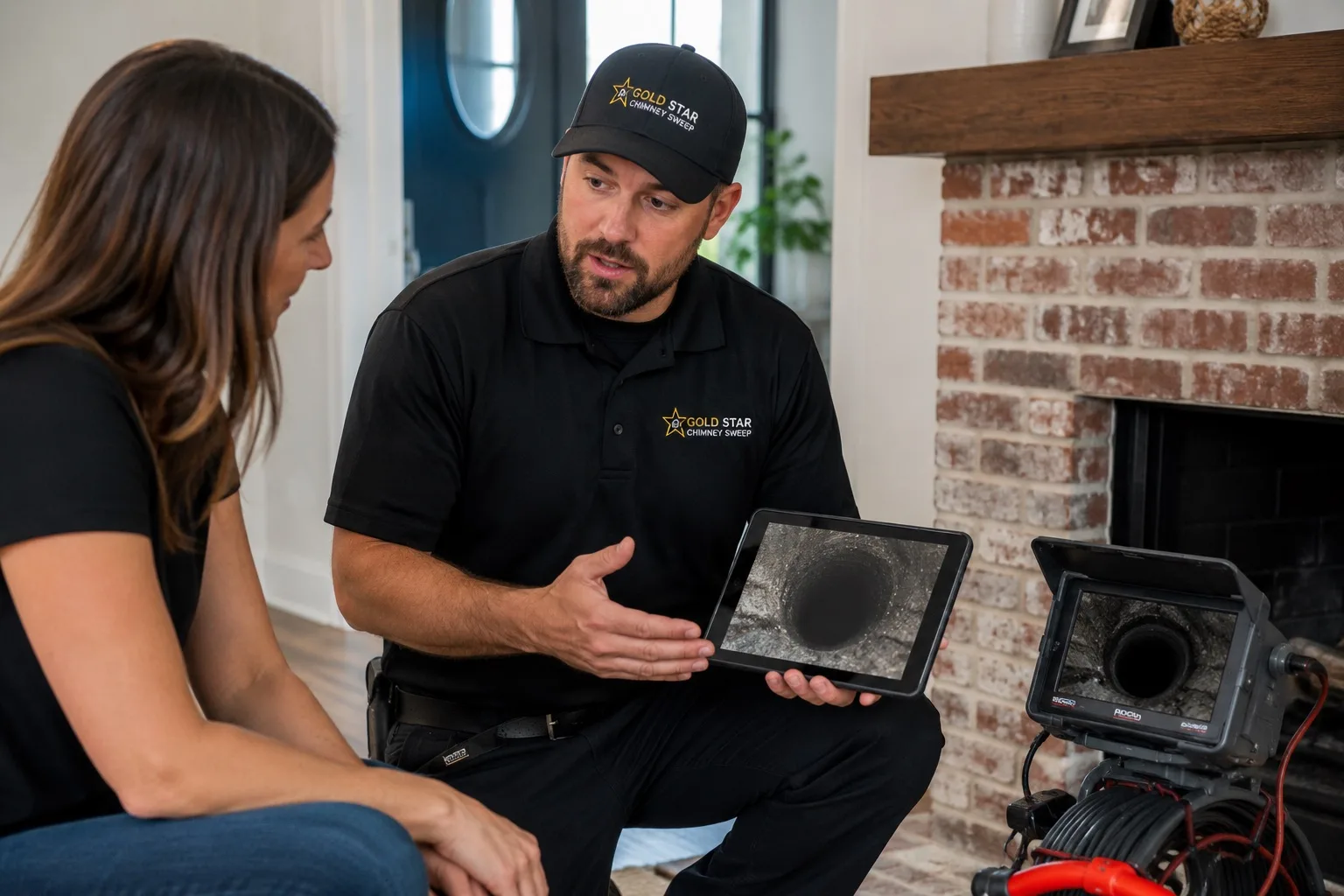
You get a written report either way. Not a verbal looks fine at the door, but findings you can price out, share with an insurer, or hand to a buyer.
★ Scope of work
What is included
Level 1, the annual check
Readily accessible portions of the chimney exterior and interior, plus accessible parts of the appliance and connection. Confirms basic soundness and that the flue is clear.
Level 2, sale, change, or event
Everything in Level 1, plus accessible attic, crawl space, and basement areas, clearance to combustibles, and a video scan of the flue interior. No demolition required.
Level 3, suspected hidden hazard
Where a Level 1 or 2 points to a concealed problem, this level accesses it, which can mean removing portions of the chimney or building structure.
Video flue scanning
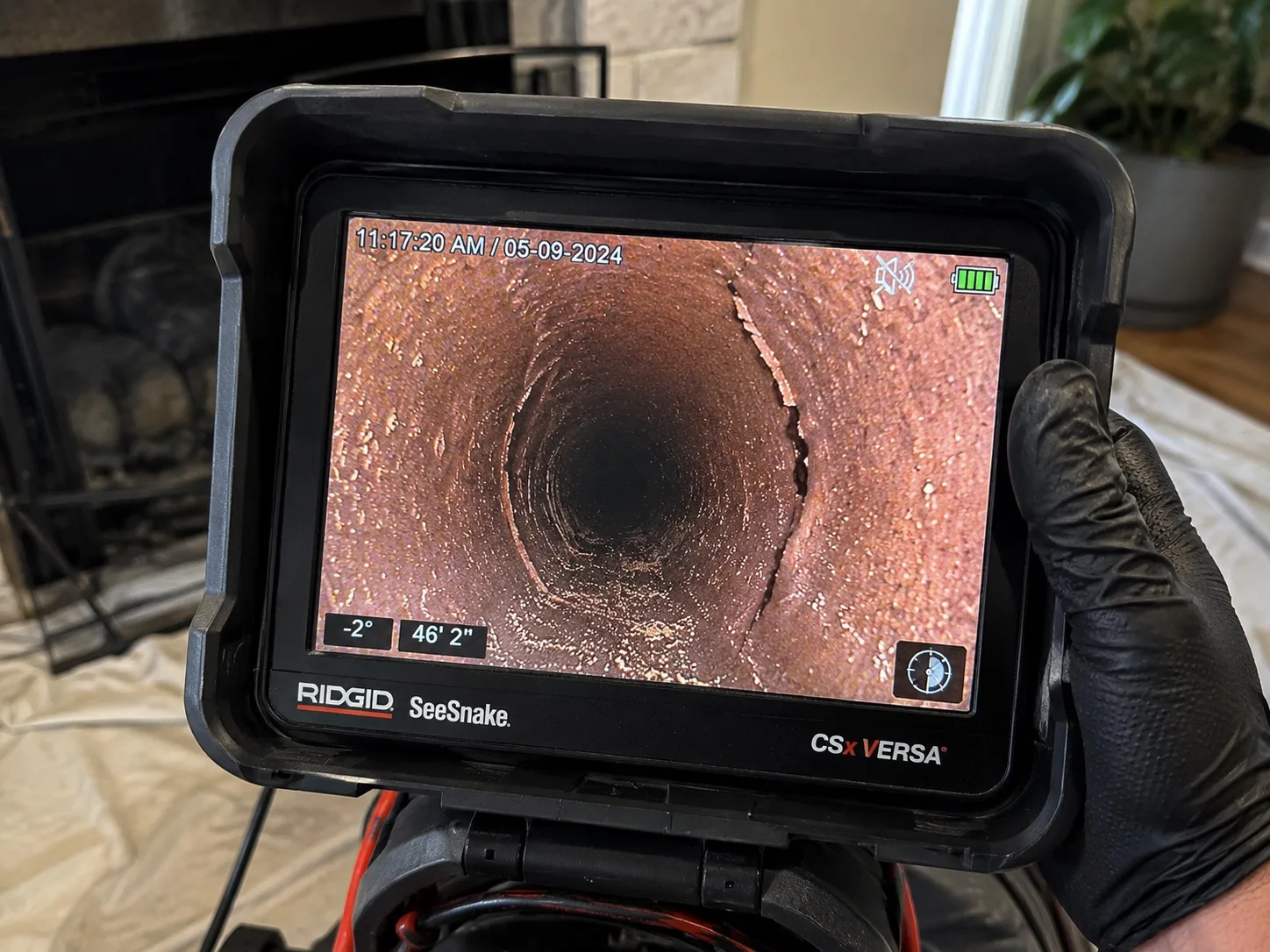
A camera run through the flue shows liner condition, cracks, gaps, and blockages that cannot be assessed from either end.
Written findings
What was checked, what was found, what it means, and what we recommend, with photos.
Straight recommendations
If the chimney does not need work, the report says so. That answer is worth as much as any other.
★ Pricing
Chimney inspection cost
The level you need is what sets the price, which is why we agree it with you before anything starts. A quote without a level attached does not tell you what you are buying.
Level 1 — $150
The routine annual check. Readily accessible portions of the chimney inside and out, plus the appliance connection. This is the right level if you burn regularly and nothing has changed.
Level 2 — $400
Everything in Level 1, plus accessible attic, crawl space and basement areas, clearance to combustibles, and a video scan of the flue interior. Required on a property sale, after a chimney fire, after an appliance or fuel change, or after a severe weather event.
Level 3 — From $1,000
Reserved for a suspected hidden hazard that a Level 1 or 2 has pointed to. It involves opening up concealed areas, so the range is wide, from around $1,000 to $5,000 or more depending on what has to be removed and rebuilt. We scope and price it with you before starting.
Prices are for a single flue at an accessible chimney. Multiple flues or difficult roof access are quoted before we start. We confirm the level with you first, so the price is agreed up front.
★ Warning signs
Signs you may need this
- It has been a year or more since the last inspection
- You are buying or selling a home with a fireplace or chimney
- You have had, or suspect you have had, a chimney fire
- You changed fuel type or installed a new appliance
- A storm, earthquake, or falling limb hit the chimney
- Your insurer asked for documentation of chimney condition
Seeing more than one of these usually means the underlying issue has been developing for a while. It is worth having looked at rather than watched.
Why this is not worth deferring
Most of a chimney is hidden. The flue interior, the smoke chamber, the sections passing through framing and attic, none of it is visible from the living room, and a general home inspector is not equipped to assess it. A flue coated in creosote cannot be evaluated at all until it is swept.
The report is also leverage. It gives you a documented condition record for insurance, a basis for negotiating during a sale, and a way to plan repairs in order of urgency instead of all at once.
★ South Florida
When South Florida homeowners actually need an inspection
Three situations drive most of the inspection work here, and only one of them is the routine annual check.
After a named storm
Wind lifts and loosens caps, shifts flashing, and forces water deep into masonry. Very little of that is visible from the ground. Insurance policies generally have tight reporting windows after a hurricane, so a documented assessment carried out early is worth considerably more than one carried out a month later.
Buying or selling
This is a high-turnover property market and a fireplace is rarely the focus of a general home inspection. A Level 2 is the correct level on a sale: it adds a video scan of the flue and covers clearance to combustibles, neither of which a standard home inspection assesses.
A fireplace of unknown history
Plenty of homes here contain a fireplace nobody in the current household has ever used. Unknown history is exactly the case Level 2 exists for, and it is worth resolving before the first fire rather than during it.
Prefabricated systems
Factory-built fireplaces are widespread in homes from the 1970s onward. They are inspected differently to masonry: the chase cover, the flue pipe and its termination, and the original listed clearances all matter, and a rusted chase cover is a common finding.
Weather damage without any burning
A chimney that has never had a fire lit in it still ages. Salt corrodes metal, humidity works on mortar, and storms move things. The annual inspection is what catches those while they are still small.
★ Our process
How we handle it
STEP 01
Determine the right level
Based on what prompted the call: routine, sale, fire, appliance change, or suspected damage.
STEP 02
Inspect the system
Exterior, interior, appliance connection, and the areas the chosen level covers.
STEP 03
Scan the flue
Video where the level calls for it, so liner condition is documented rather than assumed.
STEP 04
Report and prioritise
Written findings with photos, and a plain ranking of what is urgent versus what can wait.
★ Why choose us
Why homeowners book this with Gold Star Chimney Sweep
- The inspection comes first, so the recommendation has evidence behind it
- Photos of what we found, included in the written report
- Plain explanations, no jargon you have to nod along to
- Containment and floor protection on every interior visit
- Work priced by scope, written out rather than quoted verbally
- We are comfortable telling you nothing needs doing
★ Questions
Chimney Inspections FAQs
More on the full FAQ page.
NFPA 211 calls for at least once a year for chimneys, fireplaces, and vents, with cleaning and repair carried out when the inspection shows they are needed.
A Level 1 inspection is $150 and a Level 2 is $400. Level 3 runs from $1,000 and can reach $5,000 or more, because it involves opening up concealed areas and the scope depends entirely on what is behind the masonry. We confirm the level with you before any work starts, so the price is agreed up front.
Level 1 covers readily accessible areas and is the routine annual check. Level 2 adds accessible attic, crawl space, and basement areas, clearance to combustibles, and a video scan of the flue, required after a sale, a fire, a fuel or appliance change, or a damaging weather event.
It is still worth it. Unused chimneys still take on water, still attract animals, and often vent other appliances. Deterioration does not pause because the fireplace is idle.
A general home inspection is not a chimney inspection. Home inspectors typically assess what is visible and are not trained to evaluate flue interiors or clearance to combustibles at the level NFPA 211 describes.
Yes, after any named storm that passed over the area, whether or not damage is visible from the ground. Report promptly: Florida policies typically have short claim windows, and a written report with photographs taken early is far stronger evidence than one produced weeks later.
It is not usually mandatory, but it is worth having. A Level 2 report resolves the fireplace as a negotiating point before a buyer raises it, and general home inspectors are not equipped to evaluate a flue interior.
Yes. The scope differs from masonry, covering the chase and chase cover, the flue pipe and termination, and the clearances the system was listed for. Prefab units also have a service life, and part of the inspection is establishing where yours sits in it.
★ Next step
Need chimney inspection?
Tell us what you are seeing and we will tell you whether chimney inspections is the right next step, or whether something else is.