
★ Trusted since 2006Open 7 days a week, 7:00 AM–9:00 PM
★ Trusted since 2006Open 7 days a week, 7:00 AM–9:00 PM

★ Chimney Extension
Chimney Extension in South Florida
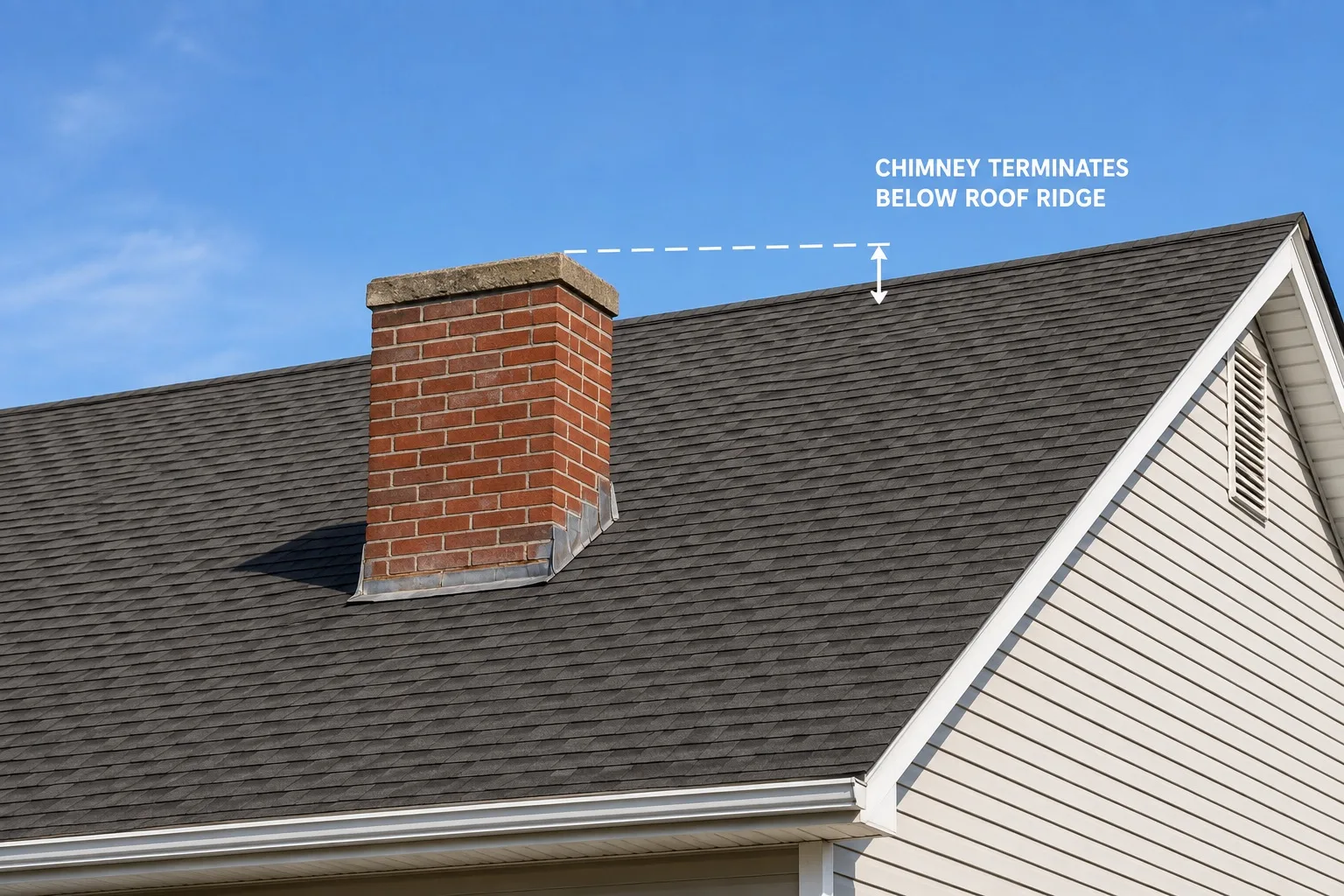
Some smoky fireplaces are not dirty, they are too short. Chimney height drives draft, and a stack that ends too low will never pull properly no matter how clean it is.
★ Overview
What chimney extension actually involves
Draft is created by the difference in temperature and pressure between the column of air inside the flue and the air outside. Taller column, stronger pull. When a chimney terminates too close to the roof, or too close to a nearby ridge, dormer, or tree line, that pull never fully develops, and wind blowing over the roof can actively push down into the opening.
Building codes address this directly. The common requirement is that a chimney extend at least three feet above the highest point where it passes through the roof, and at least two feet above anything within ten feet of it. Chimneys on additions, low-slope roofs, and homes where a second storey was added later are the usual offenders.
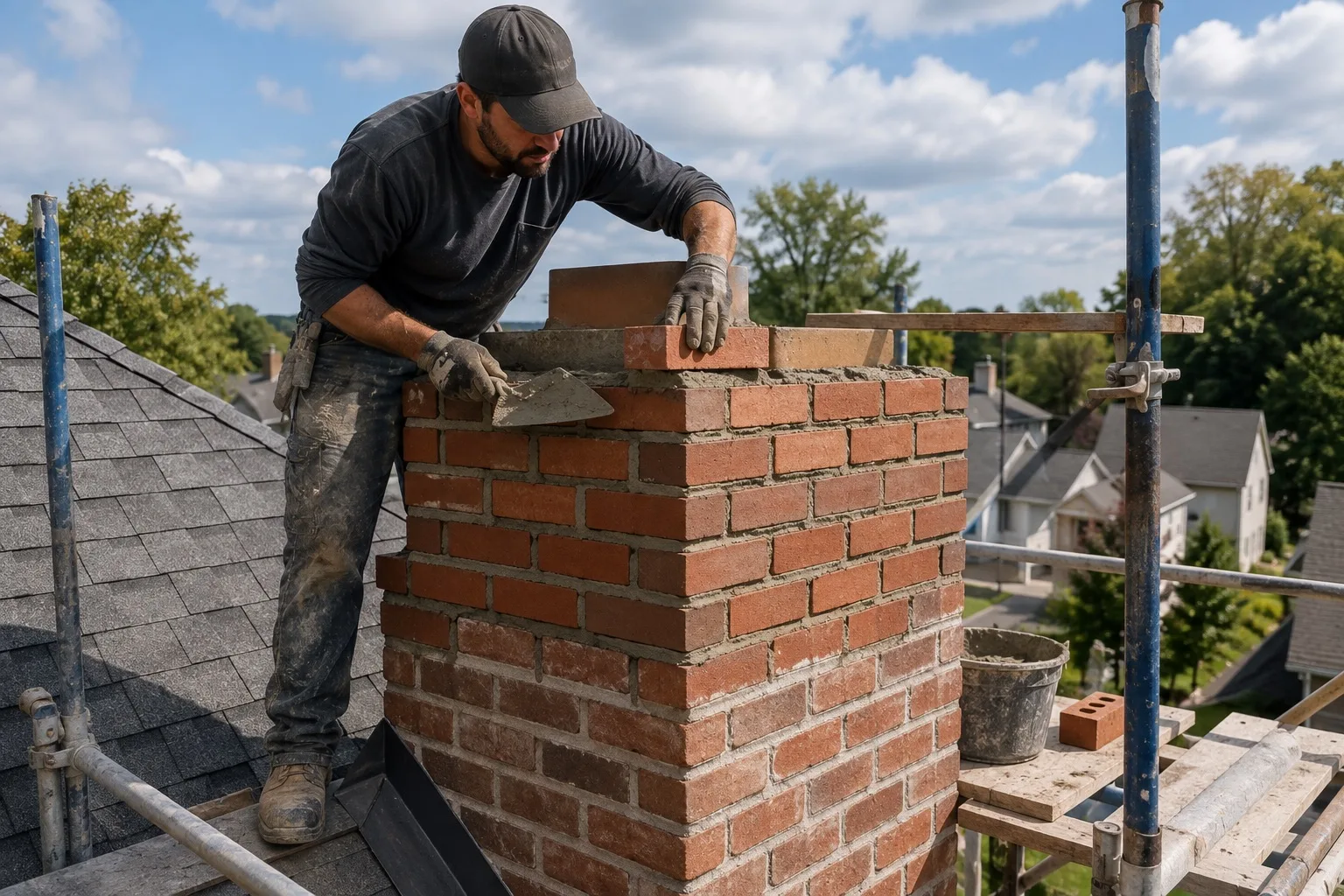
Extending the chimney lengthens the flue and moves the opening out of the turbulent air near the roof surface. It is a masonry or metal job depending on construction, and it is the correct fix when height is genuinely the problem. If you are not yet sure that it is, start with the eight reasons a fireplace smokes.
★ Scope of work
What is included
Height and clearance measurement
Actual measurements against the roof penetration point and anything within ten feet, rather than an eyeball estimate.
Draft diagnosis first
We rule out the cheaper causes: blockage, closed damper, negative pressure in the house, undersized flue, before recommending construction.
Construction assessment
Whether the existing stack and footing can carry additional height, and how much.
Matched masonry
Where brick is extended, we work to match the existing brick and mortar as closely as available materials allow.
Liner continuation
The flue liner extends with the chimney. A lengthened stack over a short liner is an unlined section, which is not acceptable.
New crown and cap
The top is rebuilt and capped as part of the work, since it is being reconstructed anyway.
★ Warning signs
Signs you may need this
- Smoke enters the room on windy days but drafts fine on calm ones
- The chimney visibly terminates below a nearby ridge, dormer, or addition
- Persistent downdrafts and cold air falling out of the fireplace
- Draft problems that a cleaning and inspection did not resolve
- A second storey, addition, or roof change was built after the chimney
- An inspector or code official flagged insufficient chimney height
Seeing more than one of these usually means the underlying issue has been developing for a while. It is worth having looked at rather than watched.
Why this is not worth deferring
Chronic downdraft is more than an annoyance. Smoke entering the room brings combustion byproducts with it, deposits soot on walls and ceilings, and makes a fireplace something you stop using. On appliance flues, poor draft can mean incomplete venting.
Extension is also the honest answer where other fixes are not. Draft-correcting caps, glass doors, and top-mount dampers all help at the margins, but none of them make a short chimney tall. If the height is wrong, correcting the height is what works.
★ South Florida
When height is the problem in South Florida
Extensions are less common here than repairs, but a short stack behaves badly in coastal wind and the symptom is distinctive.
Coastal wind
Steady onshore wind moving across a roof produces exactly the turbulence a short chimney cannot cope with. The signature is a fireplace that drafts acceptably on a calm evening and pushes smoke into the room on a breezy one.
Additions and second storeys
A chimney that met the height requirement when it was built no longer does once a room is added beside it or a storey goes on above. This is a common history on homes here, and the fireplace usually starts misbehaving immediately after the work.
Low-slope roofs
Plenty of housing stock in this region has a shallow roof pitch. A chimney terminating close to a broad, low roof surface sits in moving air rather than clear of it, and the required clearance above nearby obstructions is easy to miss.
Mature tree canopy
Dense canopy close to the house counts as an obstruction for draft purposes even though it is not part of the building. Trees that were small when the chimney was built may not be small now.
Rule out the cheaper causes first
Height is the most expensive explanation for a smoky fireplace and not the most likely one. Blockage, a partly open damper, an unparged smoke chamber, and negative pressure from air conditioning are all more common. We check those first, every time.
Build for the wind
Added height means added exposure. An extension here is built and fastened with storm loading in mind, and the crown and cap are rebuilt as part of the work rather than reused.
★ Our process
How we handle it
STEP 01
Diagnose the draft
Inspection first. Height only gets recommended once the common causes are ruled out.
STEP 02
Measure against requirements
Roof penetration point, nearby obstructions, and the resulting required termination height.
STEP 03
Scope the build
How much height, in what material, and what it means for the liner, crown, and cap.
STEP 04
Extend and finish
The stack is built up, the liner continued, and the top crowned and capped.
★ Why choose us
Why homeowners book this with Gold Star Chimney Sweep
- The inspection comes first, so the recommendation has evidence behind it
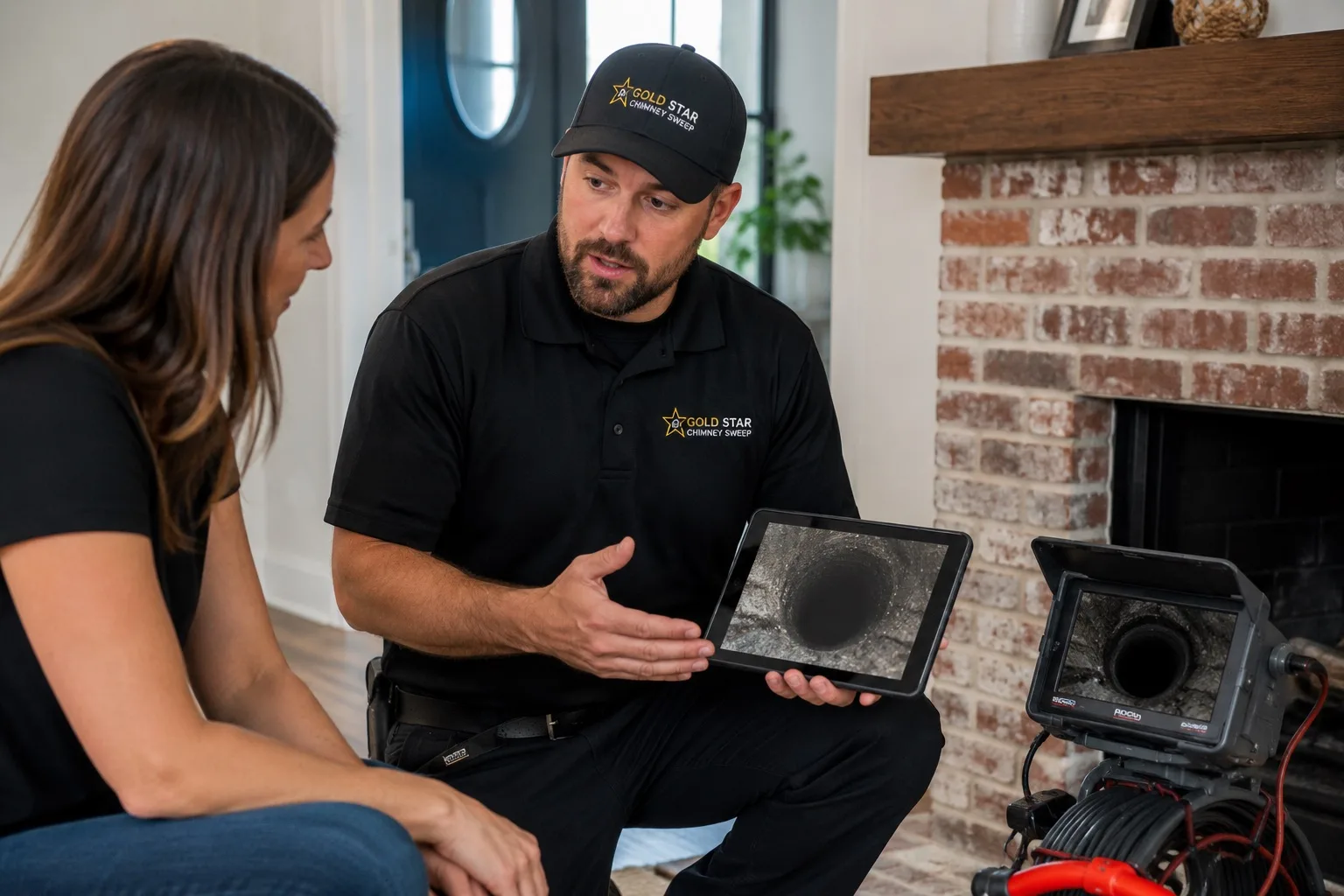
- Photos of what we found, included in the written report
- Plain explanations, no jargon you have to nod along to
- Containment and floor protection on every interior visit
- Work priced by scope, written out rather than quoted verbally
- We are comfortable telling you nothing needs doing
★ Questions
Chimney Extension FAQs
More on the full FAQ page.
The widely adopted rule is three feet above the roof at the point of penetration and two feet above anything within ten feet. Your local code governs, and we confirm against it rather than assuming.
It will if height is the cause. It will not if the real problem is a blockage, an undersized flue, an oversized fireplace opening, or a house under negative pressure. That is why the diagnosis comes first.
Most can, within limits. The existing structure and footing have to carry the added weight, and there is a practical ceiling on how far a masonry stack can go up without additional support.
On factory-built systems, listed extension sections are the correct method. On masonry chimneys, matching masonry is usually preferable for appearance and durability.
That pattern does point at height or downdraft more than at anything else, and it is worth measuring. It can also be caused by a nearby obstruction rather than the chimney itself, which is why we measure against the roof and everything within ten feet before recommending construction.
Because the chimney that cleared the roofline before now terminates below a taller part of the building. The requirement is height above the highest point within ten feet, and building work beside or above a chimney frequently breaks it.
Sometimes, and it is worth trying first because it costs far less. Draft-correcting tops help in certain wind conditions. What they cannot do is make a short chimney tall, so if the measurements show insufficient height, a cap is a temporary improvement rather than a fix.
★ Next step
Need chimney extension?
Tell us what you are seeing and we will tell you whether chimney extension is the right next step, or whether something else is.