
★ Trusted since 2006Open 7 days a week, 7:00 AM–9:00 PM
★ Trusted since 2006Open 7 days a week, 7:00 AM–9:00 PM

★ Chimney Cap Installation
Chimney Cap Installation in South Florida
A cap is a small part with an outsized job: it keeps water, animals, and windblown debris out of an opening that runs straight into your house.
★ Overview
What chimney cap installation actually involves
An uncapped flue is an open pipe pointed at the sky. Rain falls straight down it. Squirrels and chimney swifts climb in and build nests in it. Leaves collect at the smoke shelf. Over a few seasons that adds up to rusted dampers, spalling brick, staining on the firebox, and blockages that push smoke back into the room.
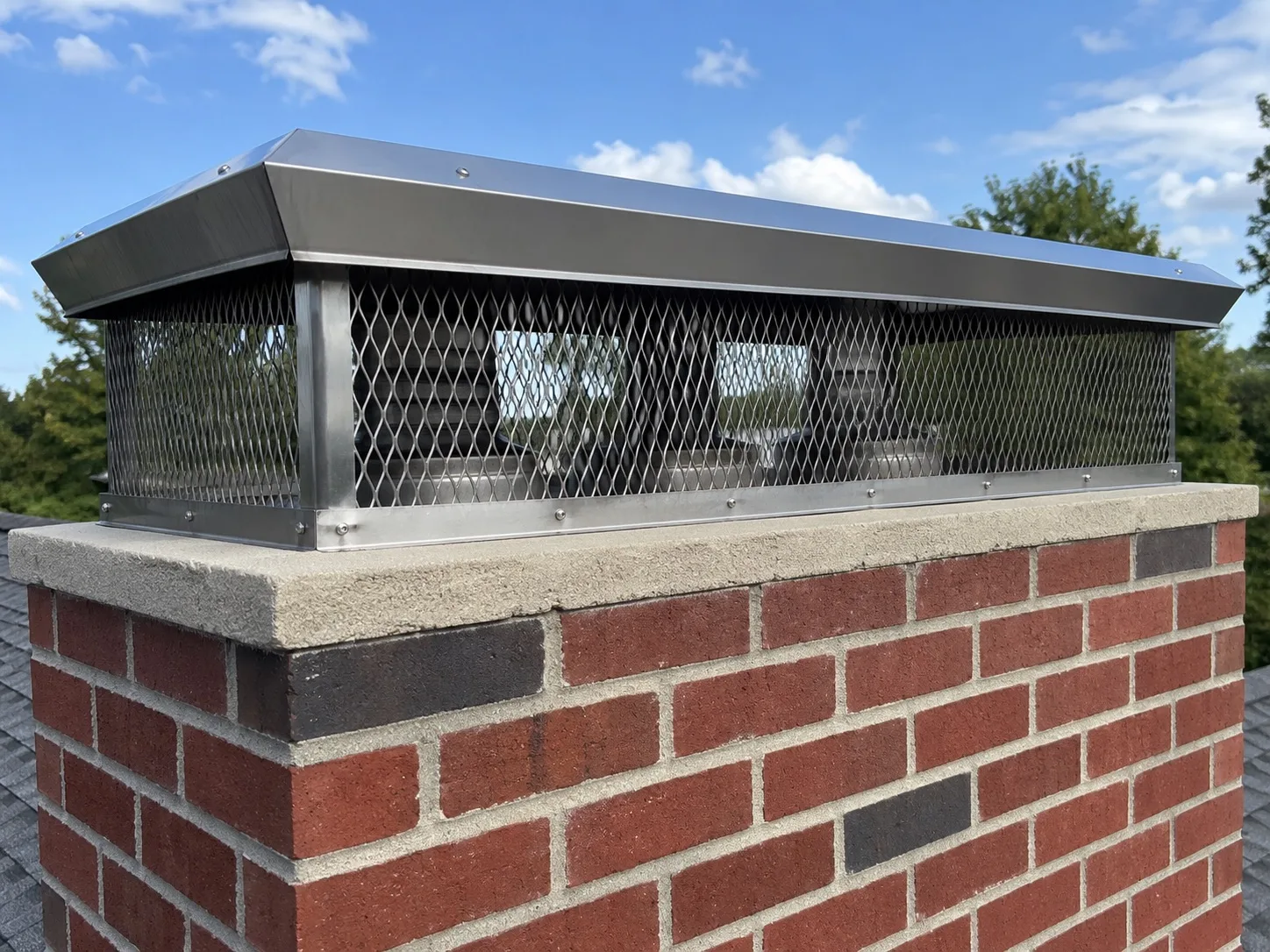
Chimney cap installation solves all of that with one part. We measure the flue, confirm whether the existing crown can carry a cap, and fit a unit that seals the opening while still letting exhaust out at full draft.
If you have more than one flue in the same stack, a fireplace flue plus a furnace flue is common, we will tell you whether individual caps or a single multi-flue cover is the better fit.
In this climate a cap does more work than it does almost anywhere else. It is the single cheapest component on the chimney and the one that prevents the largest share of the expensive problems.
★ Scope of work
What is included
Flue measurement
Every flue is measured at the top, since clay tile, metal, and oval flues all need different mounting. A cap that almost fits is a cap that comes off in a storm.
Crown and top condition check
Before anything gets mounted we look at the crown or top plate it will sit on. Fastening a cap to crumbling mortar is a temporary fix at best.
Cap selection
Stainless steel for most homes, copper where appearance matters. We explain the tradeoff on mesh sizing: tighter mesh blocks more animals but needs cleaning more often.
Draft-safe fitting
The cap has to shed water without choking the flue. Height above the opening and open area are both checked against the flue size.
Secure mounting
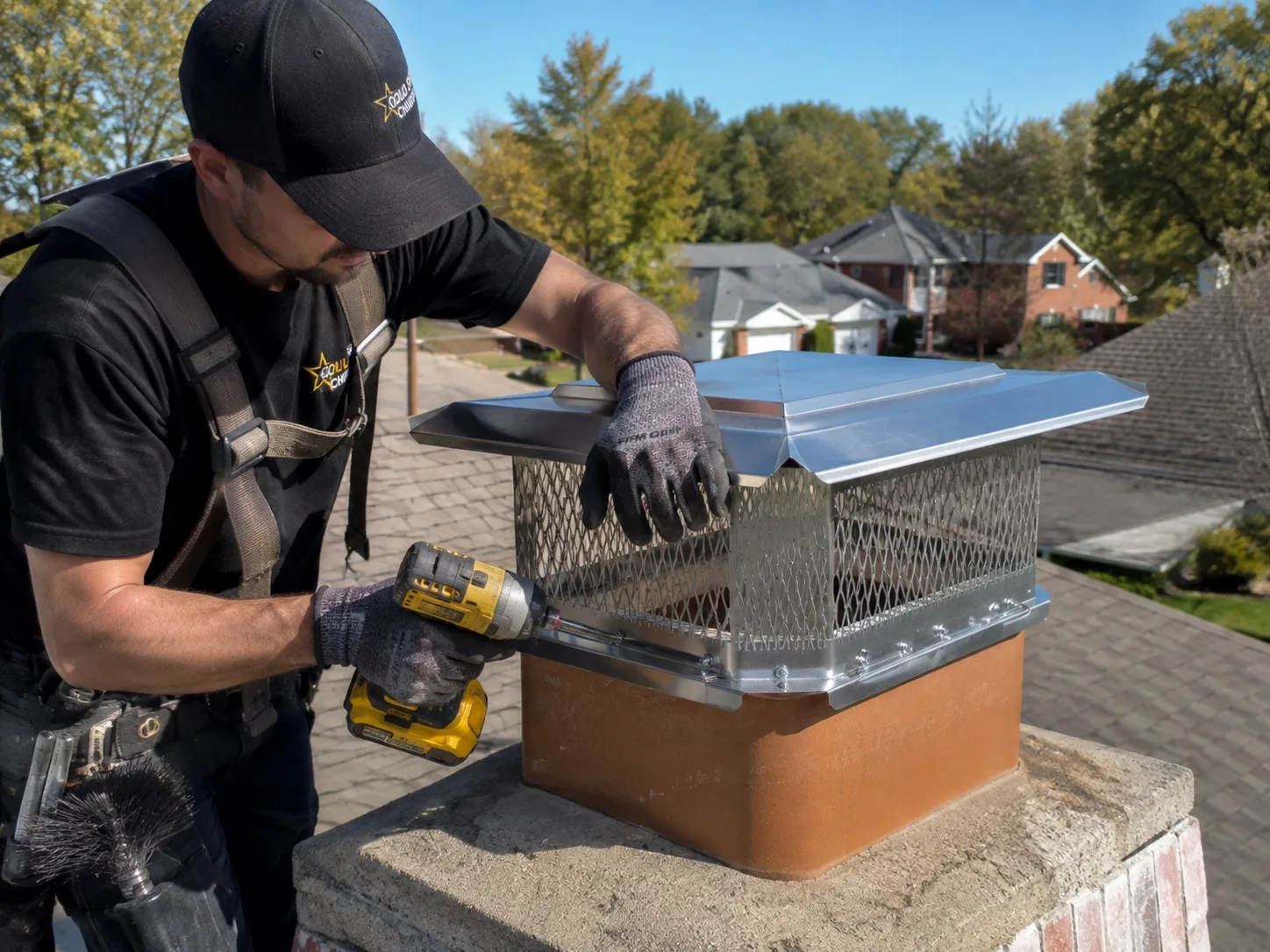
Fastened to the tile, the crown, or a top plate depending on construction, not left friction-fit and hoped for.
Multi-flue options
Where several flues share a stack, a single full-coverage top can protect the whole crown and often costs less than individual caps.
★ Warning signs
Signs you may need this
- You can hear rain dripping or hitting metal inside the fireplace
- Animals, chirping, or scratching sounds coming from the chimney
- Nesting material, twigs, or leaves falling into the firebox
- Rust on the damper or a damper that no longer closes fully
- White staining or damp patches on the chimney breast
- You can see daylight straight down the flue from the firebox
Seeing more than one of these usually means the underlying issue has been developing for a while. It is worth having looked at rather than watched.
Why this is not worth deferring
Water is the slowest and most expensive way a chimney fails. Masonry absorbs it, freezing weather expands it, and the brick face flakes away a layer at a time. Interior damage runs on the same clock: a damper that rusts shut, a liner that cracks, a firebox that stains.
Animal entry is the faster problem. A nest in the flue is a solid blockage, and a blocked flue sends combustion gases somewhere other than outside. Capping the opening removes the invitation entirely.
★ South Florida
Why caps matter more here
Rain, wildlife, and salt all arrive year-round, and an uncapped flue is open to all three.
Rain, in volume
Afternoon storms through the wet season and tropical systems in the autumn send a great deal of water at the roof. An uncapped flue is a vertical pipe pointed at the sky, and everything that lands in it runs down onto the smoke shelf and the damper.
Wildlife year-round
There is no hard winter here to interrupt nesting. Birds, squirrels, and raccoons treat an open flue as available shelter in most months of the year, and a nest is a solid blockage in a pipe that has to stay clear.
Galvanized will not last
This is the single most useful thing we can tell you about caps in this region. Galvanized steel corrodes quickly in salt-laden humid air. Stainless costs more up front and routinely outlasts several galvanized caps. Near the water, it is not a close decision.
Storm fixings
A cap that is friction-fitted will eventually leave in a storm. Ours are fastened to the tile, the crown, or a top plate depending on how the chimney is built, because wind uplift here is a design consideration rather than a rare event.
Chase covers on prefab systems
A factory-built chimney has a metal chase cover with a screened opening for the flue, not a masonry crown. Those covers rust through, and the screen often corrodes away first. Replacing a failed cover with a custom stainless one is a different job from fitting a cap, and it is the more common need on those systems.
Multi-flue tops
Where several flues share one stack, a single full-coverage top protects every flue plus the whole crown. In a climate where the crown is under constant water attack, that added coverage often justifies itself.
★ Our process
How we handle it
STEP 01
Assess the top
We check flue count, flue type, and the condition of the crown the cap will mount to.
STEP 02
Recommend the cap
Material, mesh, and single versus multi-flue, with the reasoning explained before you approve anything.
STEP 03
Install and secure
The cap is fitted and fastened to the appropriate surface for your chimney construction.
STEP 04
Confirm and show you
We verify clearance and draft, then show you photos of the finished install from the roof.
★ Why choose us
Why homeowners book this with Gold Star Chimney Sweep
- The inspection comes first, so the recommendation has evidence behind it
- Photos of what we found, included in the written report
- Plain explanations, no jargon you have to nod along to
- Containment and floor protection on every interior visit
- Work priced by scope, written out rather than quoted verbally
- We are comfortable telling you nothing needs doing
★ Related services
Often needed alongside this
★ Questions
Chimney Cap Installation FAQs
More on the full FAQ page.
Stainless steel and copper caps commonly last for many years; galvanised caps rust out considerably sooner, which is why we do not recommend them. Lifespan depends more on mounting quality and how much moisture the crown holds than on the cap itself.
A correctly sized cap will not. Problems happen when the open area under the cap is smaller than the flue or the cap sits too low. Both are sizing errors, not a limitation of caps.
Sometimes. Specialty draft-correcting tops help in certain wind conditions, but downdrafts are often a chimney height problem instead. That is worth diagnosing before buying hardware.
Not necessarily. Individual caps work well; a multi-flue cover protects every flue plus the whole crown at once. Which is better depends on crown condition and stack layout.
Stainless, without much hesitation near the coast. Salt air corrodes galvanized steel quickly, and a cap that rusts out has stopped protecting the flue long before it looks obviously finished. Copper is the other durable option where appearance matters.
A properly fastened one is far more likely to. Caps that rely on friction alone are the ones that come off. We fasten to the tile, crown, or top plate according to the construction, which is also what makes the difference in ordinary storm winds.
Most likely a chase cover, possibly both. Prefab systems have a metal cover across the top of the chase with a screened flue opening. When that cover corrodes, a cap alone will not solve the water problem, because the entry point is the cover itself.
★ Next step
Need chimney cap installation?
Tell us what you are seeing and we will tell you whether chimney cap installation is the right next step, or whether something else is.