
★ Trusted since 2006Open 7 days a week, 7:00 AM–9:00 PM
★ Trusted since 2006Open 7 days a week, 7:00 AM–9:00 PM

★ Chimney Sweep
Chimney Sweep Service in South Florida
A sweep visit is two jobs in one. The brushing is the visible half. The assessment of what is behind the soot is the half that tells you what to do next.
★ Overview
What chimney sweep actually involves
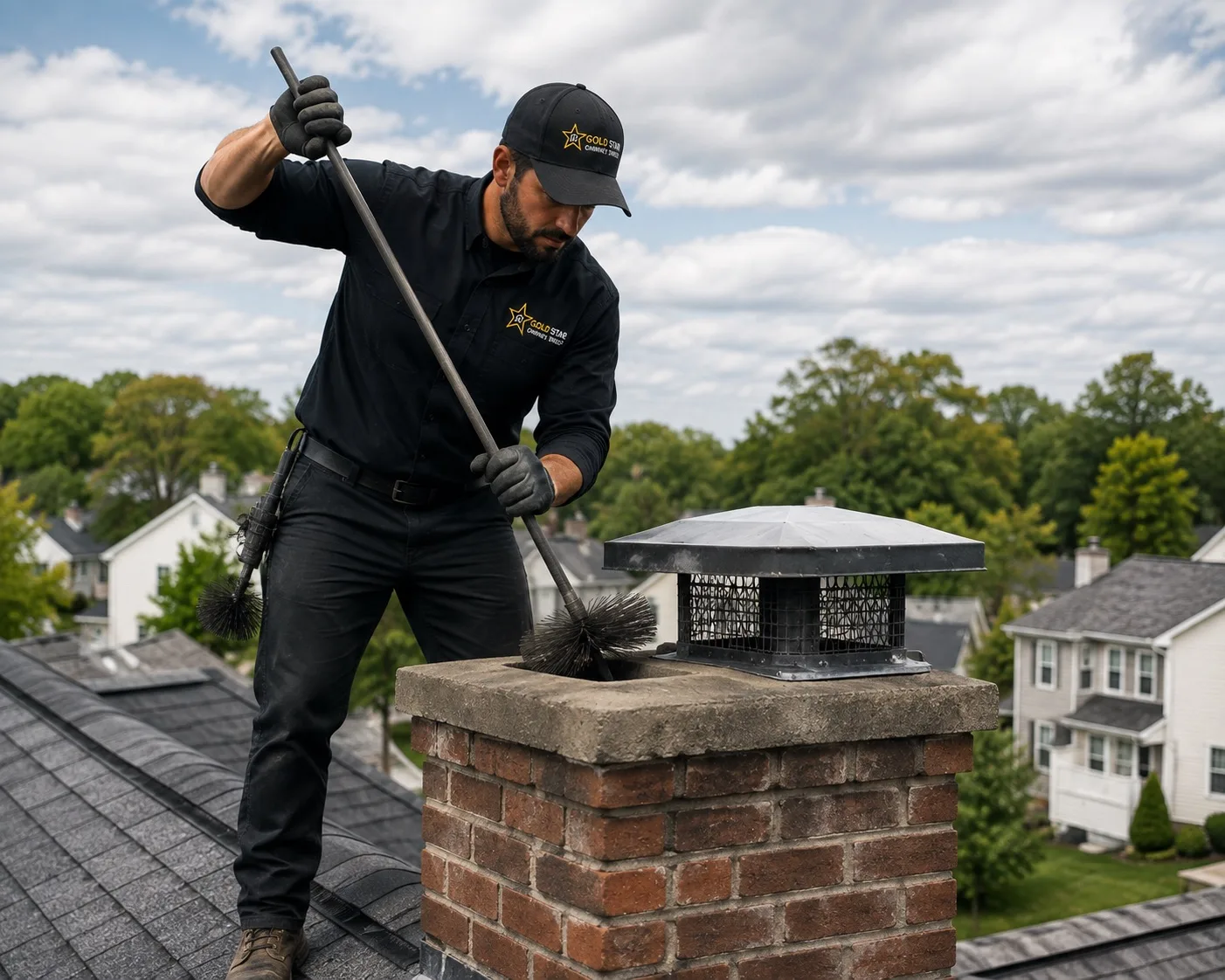
People book a chimney sweep expecting someone to brush the flue and leave. A proper visit is broader than that: the technician sweeps the system, then evaluates a chimney that can finally be seen properly, and leaves you knowing its actual condition.
That order is not arbitrary. A flue coated in creosote cannot be inspected, because you cannot assess a liner you cannot see. Which is why sweeping and inspection belong in the same visit rather than sold as separate calls months apart.
This page covers the visit itself. If you want the detail on creosote and soot removal, that is on the chimney cleaning page. If you need a documented inspection for a sale, a fire, or an insurer, see chimney inspections.
Most chimney guidance published online assumes a fireplace that burns four nights a week from October through April. Fireplaces here work nothing like that, and the difference changes what a sweep visit is actually looking for.
★ Scope of work
What is included
Arrival and setup
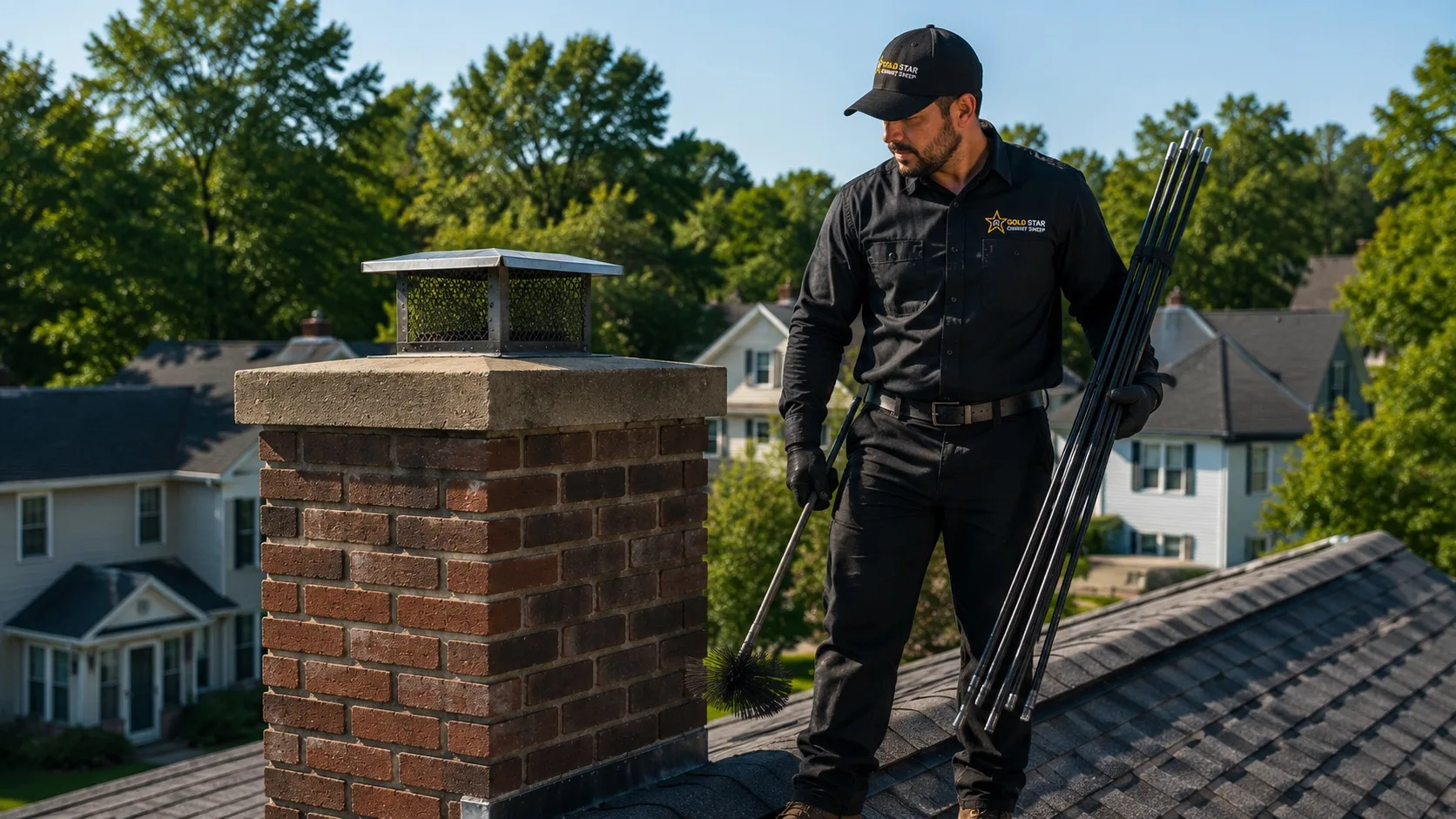
Floor covering from the entry to the hearth, drop cloths at the fireplace, HEPA vacuum sealed at the opening before any brush goes in.
Sweeping the system
Flue, smoke chamber, smoke shelf, damper, and firebox, with brush sizes matched to the flue.
Post-sweep evaluation
Liner condition, joint integrity, damper operation, blockages, and clearance concerns, assessed on a clean system.
Exterior and top check
Crown, cap, flashing, and the top of the stack, since roughly half of chimney problems start above the roofline.
Photos and findings
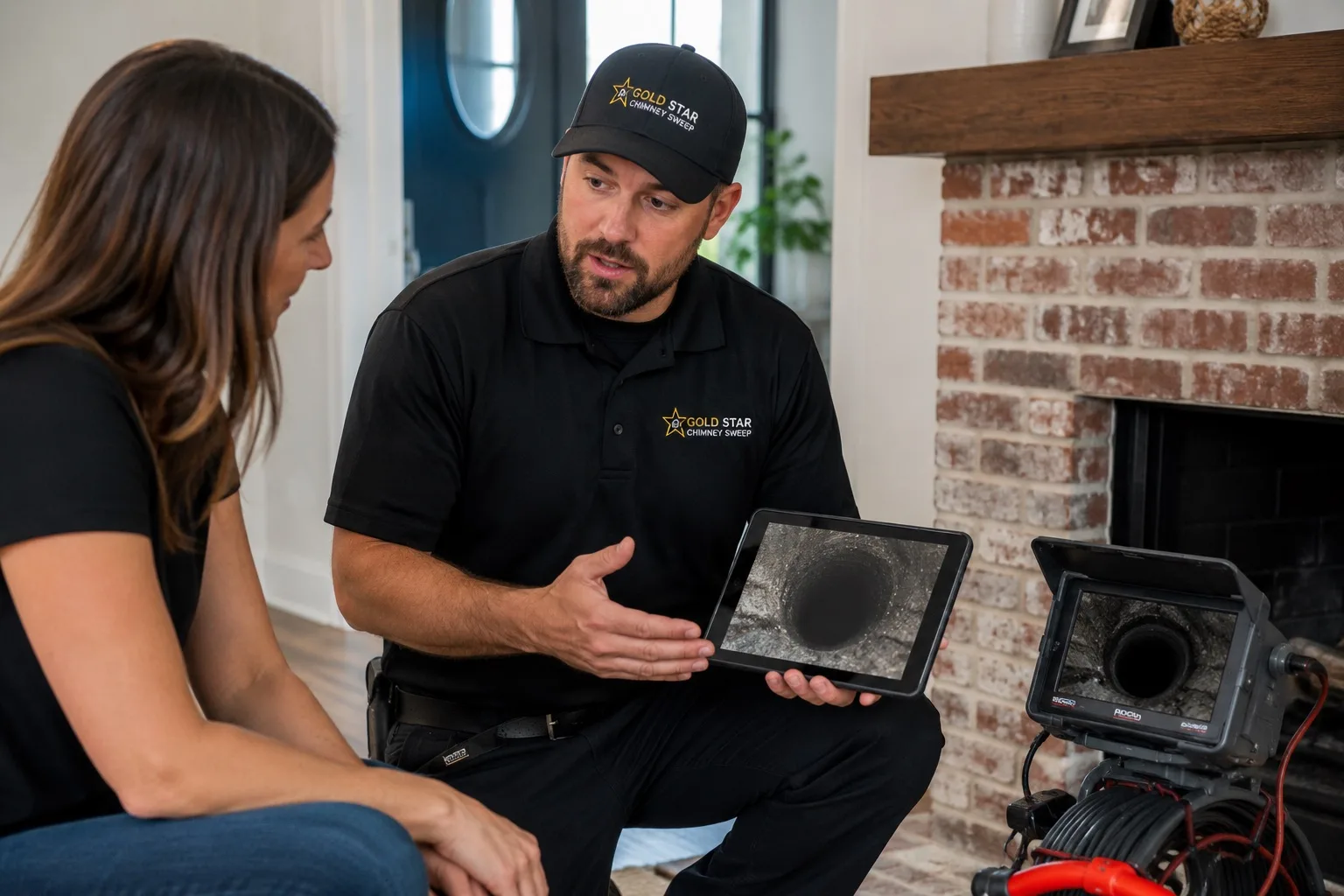
You see what we saw. Photos of anything that matters, explained without jargon.
Clear next steps
Whether that is a repair, a return visit next season, or nothing at all.
★ Warning signs
Signs you may need this
- You burned through a season and have not had the chimney serviced
- You have just bought a home with a fireplace of unknown history
- The fireplace smells or smokes more than it used to
- You want a documented baseline before the heating season
- You are about to start using a fireplace that has sat unused
- It has been more than a year since the last inspection
Seeing more than one of these usually means the underlying issue has been developing for a while. It is worth having looked at rather than watched.
Why this is not worth deferring
The sweep is what makes the inspection possible, and the inspection is what makes the visit worth booking. A chimney can be perfectly clean and still be unsafe: a cracked liner, a failing crown, and inadequate clearance to combustibles are all invisible to a brush.
There is a scheduling argument too. Demand for chimney work concentrates hard in the autumn, and roughly half of home heating fires occur across December, January, and February. Booking in late summer or early autumn means repairs found during the visit can actually be completed before you need the fireplace. If you are trying to work out your own interval, see how often you should clean your chimney.
★ South Florida
What a sweep visit finds in South Florida
Less burning than a northern home, but far more exposure. The findings skew differently here.
Debris rather than creosote
On a lightly used fireplace the flue is often more obstructed by leaves, twigs, and nesting material than by soot. The canopy sheds year-round and the nesting season runs long, so an open flue collects steadily whether or not anyone lights a fire.
Corrosion at the top
Salt-laden air holds moisture against metal. Caps, dampers, chase covers, and flashing degrade years earlier than the same components inland, and the top of the stack is where we usually find it first.
Prefabricated systems
A great many homes built here between the 1970s and 2000s have a factory-built fireplace inside a framed chase rather than a masonry chimney. Those systems have their own failure point: the metal chase cover. Galvanized covers rust through, and once they do water enters the chase cavity where nobody can see it.
Moisture that never leaves
Masonry in this climate rarely gets a chance to dry out. Persistent damp breaks down mortar from the inside, and the white staining known as efflorescence on a chimney breast is a common early sign.
Storm aftermath
Named storms lift caps, shift flashing, and drive water into the stack. A sweep booked after storm season frequently turns into a damage assessment.
Booking ahead of the cool fronts
Demand here compresses into a short window either side of the first cold snap. Booking in late summer or early autumn means anything found can be repaired before you want the fireplace.
★ Our process
How we handle it
STEP 01
Book a time
Give us the fuel type, appliance, and what you have noticed. It helps us arrive with the right equipment.
STEP 02
Sweep the system
Containment down, full sweep of flue, smoke chamber, damper, and firebox.
STEP 03
Assess and photograph
Interior and exterior evaluation on a system that can finally be seen.
STEP 04
Walk you through it
Findings explained in plain terms, with recommendations ranked by urgency.
★ Why choose us
Why homeowners book this with Gold Star Chimney Sweep
- The inspection comes first, so the recommendation has evidence behind it
- Photos of what we found, included in the written report
- Plain explanations, no jargon you have to nod along to
- Containment and floor protection on every interior visit
- Work priced by scope, written out rather than quoted verbally
- We are comfortable telling you nothing needs doing
★ Questions
Chimney Sweep FAQs
More on the full FAQ page.
In practice they overlap heavily. We use sweep for the full service visit, cleaning plus inspection plus report, and cleaning for the deposit-removal work itself. If you book either, you get both.
Usually about an hour to ninety minutes for a single flue, including setup, sweeping, inspection, and going through the findings. Heavy glazed creosote or multiple flues take longer.
Late summer through early autumn. Availability is better, and anything the inspection turns up can be repaired before you need the fireplace.
Do not burn a fire for at least 24 hours beforehand, and clear a path to the fireplace. We handle covering and containment.
Usually yes for the inspection, though not necessarily an annual sweep. In this climate the chimney takes more punishment from weather, animals, and humidity than it does from burning. An unused flue still collects debris and still corrodes.
Yes. Factory-built systems are common here and they need the same annual attention, plus checks specific to them: the chase cover, the flue pipe termination, and clearances that were set at installation.
It is worth it after any named storm, even with no visible damage. Wind lifts caps and drives water into places you cannot see from the ground, and finding it early usually matters for both repair cost and any insurance claim.
★ Next step
Need chimney sweep?
Tell us what you are seeing and we will tell you whether chimney sweep is the right next step, or whether something else is.