
★ Trusted since 2006Open 7 days a week, 7:00 AM–9:00 PM
★ Trusted since 2006Open 7 days a week, 7:00 AM–9:00 PM

★ Chimney Cleaning
Chimney Cleaning in South Florida
Chimney cleaning removes creosote and soot from the flue, smoke chamber, and firebox. In South Florida it earns its place even on a fireplace that only runs a few times a year.
★ Overview
What chimney cleaning actually involves
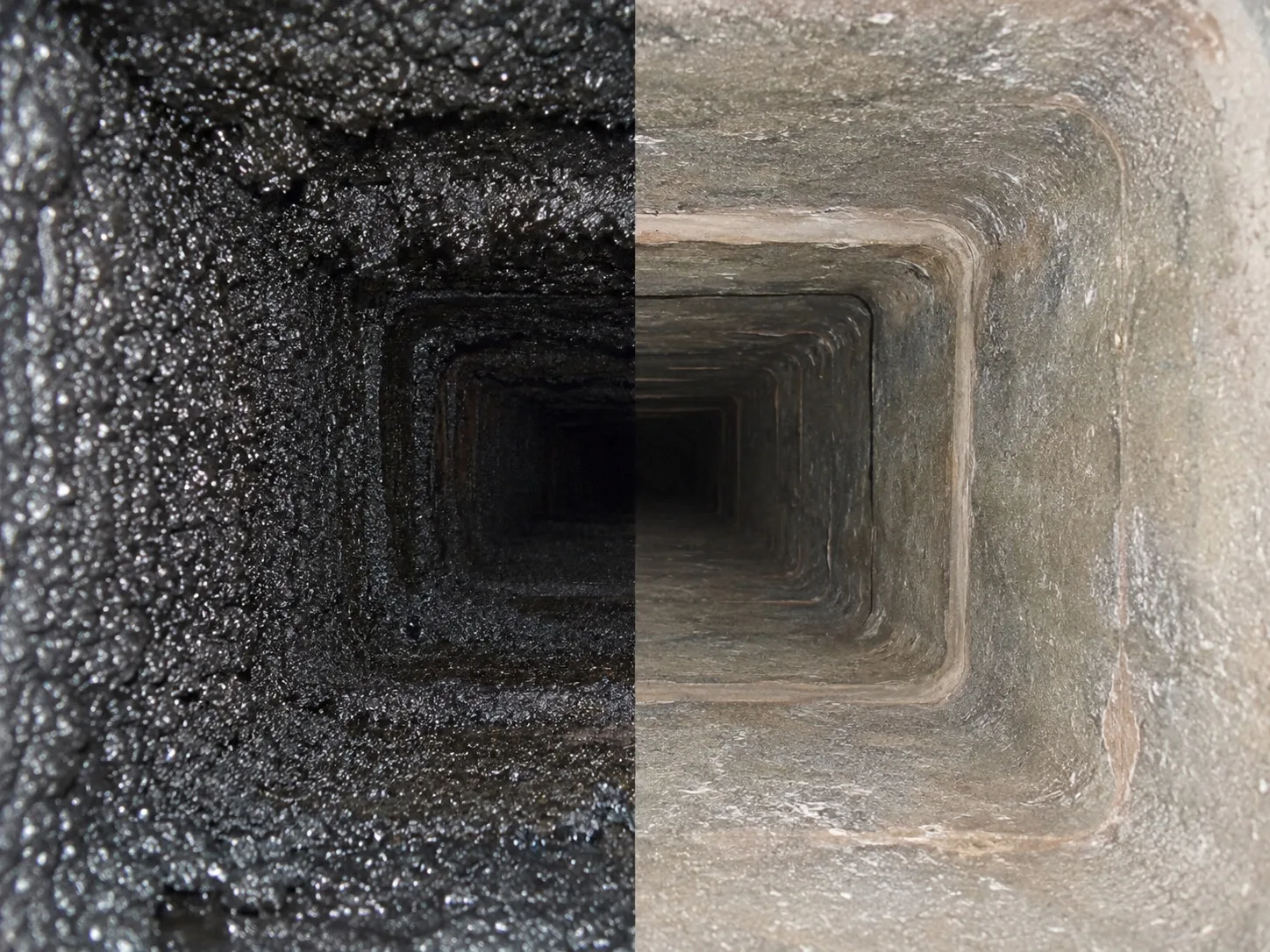
Wood does not burn completely. What is left travels up the flue as unburned particles and condensing vapour, and it settles on the cooler surfaces near the top as creosote. Early on it is dusty and brushes away easily. Left alone it hardens into a tarry layer, then into a shiny glaze that has to be treated chemically or removed mechanically.
That progression is the entire reason chimney cleaning exists. The National Fire Protection Association identifies failure to clean, principally creosote from solid-fuel heating equipment, as the leading contributing factor in home heating fires. Dry creosote ignites at roughly the same temperature as paper.
A cleaning covers more than the flue itself. Soot collects on the smoke shelf, inside the smoke chamber, and around the damper, and those areas govern how well the fireplace drafts. Sweep the flue alone and a poorly drafting fireplace often stays that way.
Most of the guidance published on this subject was written for a house in Ohio. It assumes a fireplace burning four nights a week from October through April, dry winter air, and a stack that sees snow more often than sun. None of that describes a home here, and the difference changes what your chimney actually needs.
★ Scope of work
What is included
Full flue sweep
Brushed from top to bottom, or bottom to top where roof access makes that safer, using rods and brush heads sized to your flue.
Smoke chamber and smoke shelf
The area directly above the damper collects the heaviest deposits and is skipped surprisingly often. It gets cleaned.
Damper and throat
Cleared, then operated to confirm it still opens, closes, and seals properly once the soot is off it.
Firebox
Brushed down and vacuumed, with the hearth and surrounding floor left clean.
Dust containment
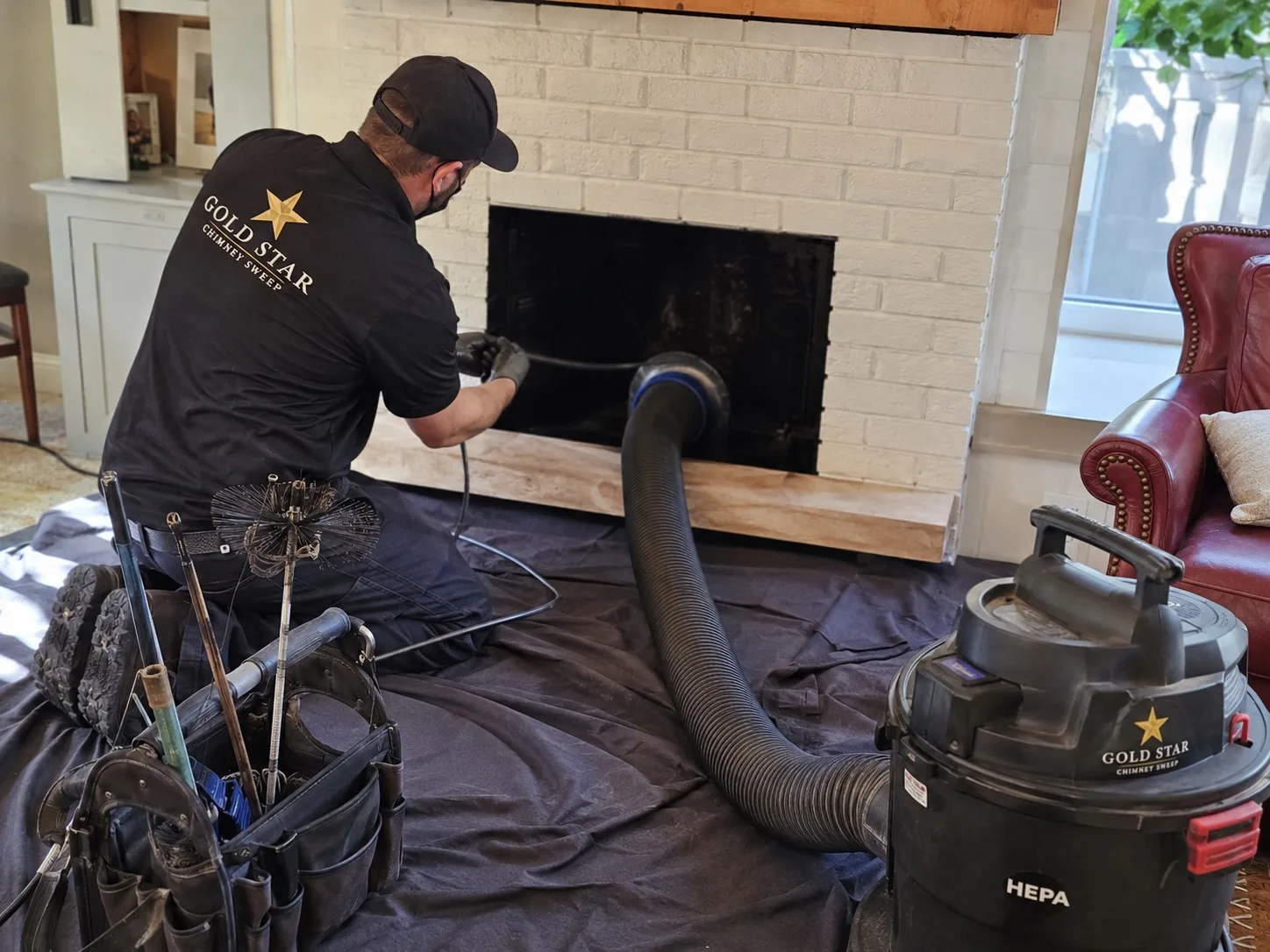
Drop cloths and a HEPA-filtered vacuum sealed at the fireplace opening before any brush goes in. A cleaning should not leave a grey film on your mantel.
Written condition report
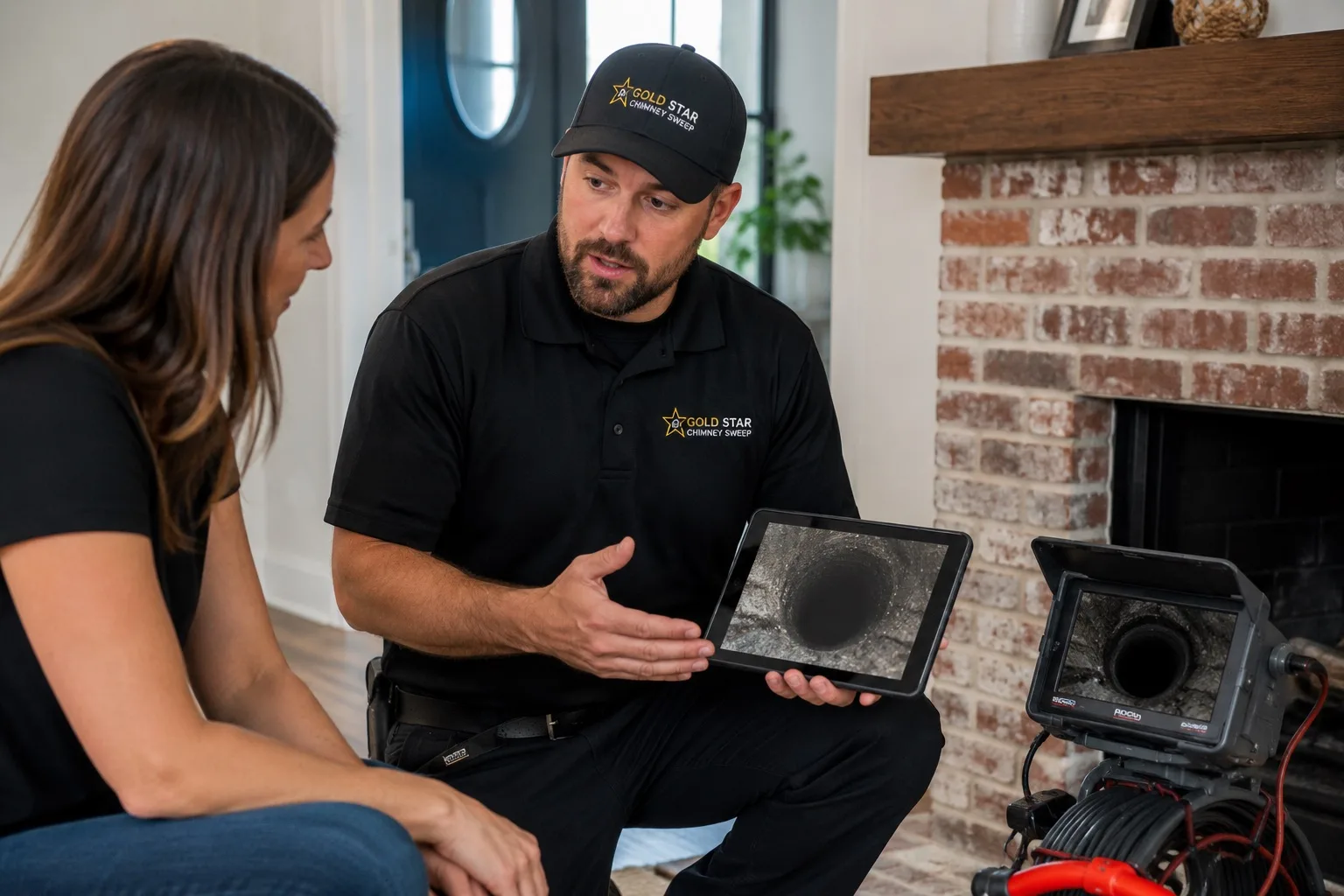
Creosote stage, blockages, and anything we noticed about the liner, crown, or cap, with photographs so you can see what we saw.
★ Warning signs
Signs you may need this
- A thick, sticky, or shiny black layer visible inside the flue
- A strong smoky or tar-like smell, usually worst on humid days
- Smoke rolling into the room when you first light a fire
- Fires that are difficult to start or will not stay going
- Black flakes or soot dropping into the firebox
- A full season since the last cleaning, or no record of when it last happened
Seeing more than one of these usually means the underlying issue has been developing for a while. It is worth having looked at rather than watched.
Why this is not worth deferring
The industry rule of thumb is that once creosote reaches about an eighth of an inch, the flue should be cleaned. That is roughly the thickness of two stacked coins, considerably thinner than most homeowners picture, which is why a visual check beats working from the calendar. We cover the thresholds in detail in how often you should clean your chimney.
Cleaning also restores draft. Deposits narrow the usable diameter of the flue and roughen its walls, and a fireplace that has been fighting a restricted flue usually burns noticeably better afterwards. Most people are not expecting that part.
There is a structural argument as well. A chimney fire can reach around 2,000°F, which is enough to crack clay liner tiles and allow heat to reach the framing the chimney passes through. Almost none of that damage is visible from the living room.
★ South Florida
Why chimney cleaning works differently in South Florida
Chimneys here face a different set of pressures than chimneys in a cold climate. Far less burning, and far more weather.
A flue that sits idle
Most fireplaces in this region run a handful of times between December and February. For the remaining ten months the flue sits still and warm. Residue softens, moisture condenses, and debris accumulates quietly while nobody is looking at it.
Humidity rather than frost
In a cold climate masonry dries out between wet spells and freeze-thaw does the damage. Here masonry rarely gets the chance to dry. Persistent moisture breaks down mortar from the inside and often shows up as efflorescence, the white staining you see on a chimney breast.
Salt in the air
Near the coast, salt settles on metal and holds moisture against it, because chloride is hygroscopic. Caps, dampers, and flashing corrode years sooner than the same components inland. A damper that will not close is frequently a salt problem rather than an age problem.
Animals and canopy debris
Nesting season runs long here and the tree canopy sheds year-round. Leaves, twigs, and nesting material collect in an open flue whether or not anyone ever lights a fire in it.
Storm exposure
Wind and driving rain shift caps, lift flashing, and force water into the stack. After a significant storm the top of the chimney is worth looking at, even when nothing appears wrong from the ground.
What you burn matters more here
Seasoned hardwood burns hot and clean. Damp wood smoulders and loads the flue quickly, and firewood stored uncovered in this humidity does not stay dry. Yard trimmings and palm fronds are not firewood: they flare unpredictably, throw embers, and leave heavy residue behind.
★ Our process
How we handle it
STEP 01
Set up and protect
Floor covering from the entry to the hearth, drop cloths at the fireplace, and the vacuum sealed at the opening before anything else begins.
STEP 02
Sweep the system
Flue, smoke chamber, smoke shelf, damper, and firebox, using brush sizes matched to the flue.
STEP 03
Inspect while it is clean
A clean flue is the only flue that can properly be assessed. We evaluate liner condition, joint integrity, and blockages now that they are actually visible.
STEP 04
Report and clear out
You get the findings, photographs where they are useful, and a hearth left as clean as we found it.
★ Why choose us
Why homeowners book this with Gold Star Chimney Sweep
- The inspection comes first, so the recommendation has evidence behind it
- Photos of what we found, included in the written report
- Plain explanations, no jargon you have to nod along to
- Containment and floor protection on every interior visit
- Work priced by scope, written out rather than quoted verbally
- We are comfortable telling you nothing needs doing
★ Questions
Chimney Cleaning FAQs
More on the full FAQ page.
NFPA 211 calls for an annual inspection, with cleaning carried out when the inspection shows it is needed rather than on a fixed schedule. A household burning a few cords a season generally needs yearly cleaning; occasional fires may not. In South Florida, book the inspection annually even if the fireplace is barely used, because the weather does more damage here than the burning does.
Usually yes for the inspection, and not necessarily every year for the sweep itself. Light use still leaves residue, and a flue that sits idle through a humid summer collects moisture and debris regardless. The inspection is what establishes whether a cleaning is actually due.
It should not be. Between drop cloths and a HEPA vacuum sealed at the fireplace opening, soot stays inside the equipment. If a company does not mention containment when you book, ask them about it before they arrive.
Brush kits exist, and light soot in an easily reached flue is within reach for a careful homeowner. What DIY does not give you is the inspection. Cracked tiles, open joints, and clearance to combustibles are the findings that matter most, and they are difficult to judge from either end of the flue.
A single straightforward flue typically runs about an hour to ninety minutes, including setup, sweeping, inspection, and going through the findings with you. Heavy glazed creosote or multiple flues take longer.
Gas appliances produce far less creosote, but the flue still needs attention. Modern high-efficiency units vent cooler, wetter exhaust that can condense inside an oversized flue, and blockages, corrosion, and liner problems occur regardless of fuel.
Early autumn, before the first cool front arrives. Availability is better than in the December rush, and anything the inspection turns up can be repaired before you actually want to use the fireplace.
★ Next step
Need chimney cleaning?
Tell us what you are seeing and we will tell you whether chimney cleaning is the right next step, or whether something else is.