
★ Trusted since 2006Open 7 days a week, 7:00 AM–9:00 PM
★ Trusted since 2006Open 7 days a week, 7:00 AM–9:00 PM

★ Chimney Repair
Chimney Repair in South Florida
Almost every masonry chimney repair traces back to water. Find where it is getting in, fix that, and the rest of the repair actually lasts.
★ Overview
What chimney repair actually involves
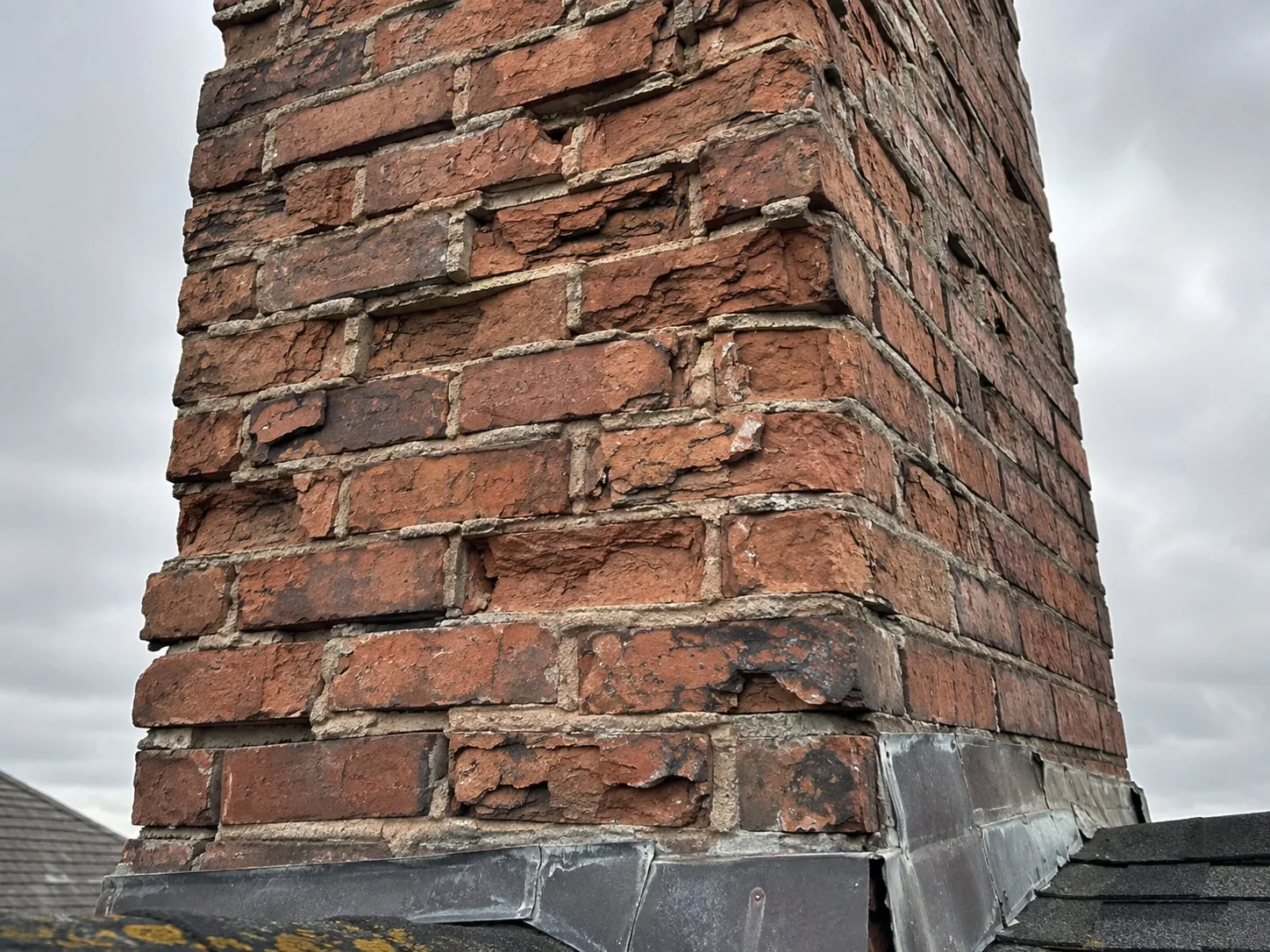
A chimney is the one part of a house exposed to weather on all four sides, top included. It has no roof over it, no siding, and a crown that is often the thinnest, most neglected concrete on the property. Water gets in through cracks in that crown, through failing mortar joints, and through flashing that has lifted where the chimney meets the roof.
Once water is inside masonry, freeze-thaw cycling does the rest. Water expands as it freezes, pushing brick faces off in flakes, which is spalling, and hollowing out mortar joints until the stack loses its bond.
The order of repairs matters more than most homeowners are told. Sealing a chimney that is still leaking at the flashing traps moisture inside the masonry and accelerates the damage. We find the entry point first.
One thing worth saying plainly: the freeze-thaw cycle that drives most published chimney repair advice does not happen here. That does not mean water causes less damage. It means it causes different damage, on a slower and more continuous schedule, and it explains why so many chimneys in this region fail at the top and at the flashing rather than through the body of the stack.
★ Scope of work
What is included
Crown repair and rebuild
The concrete slab at the top sheds water off the chimney. Cracked crowns get repaired or rebuilt with a proper overhang and drip edge.
Tuckpointing and repointing
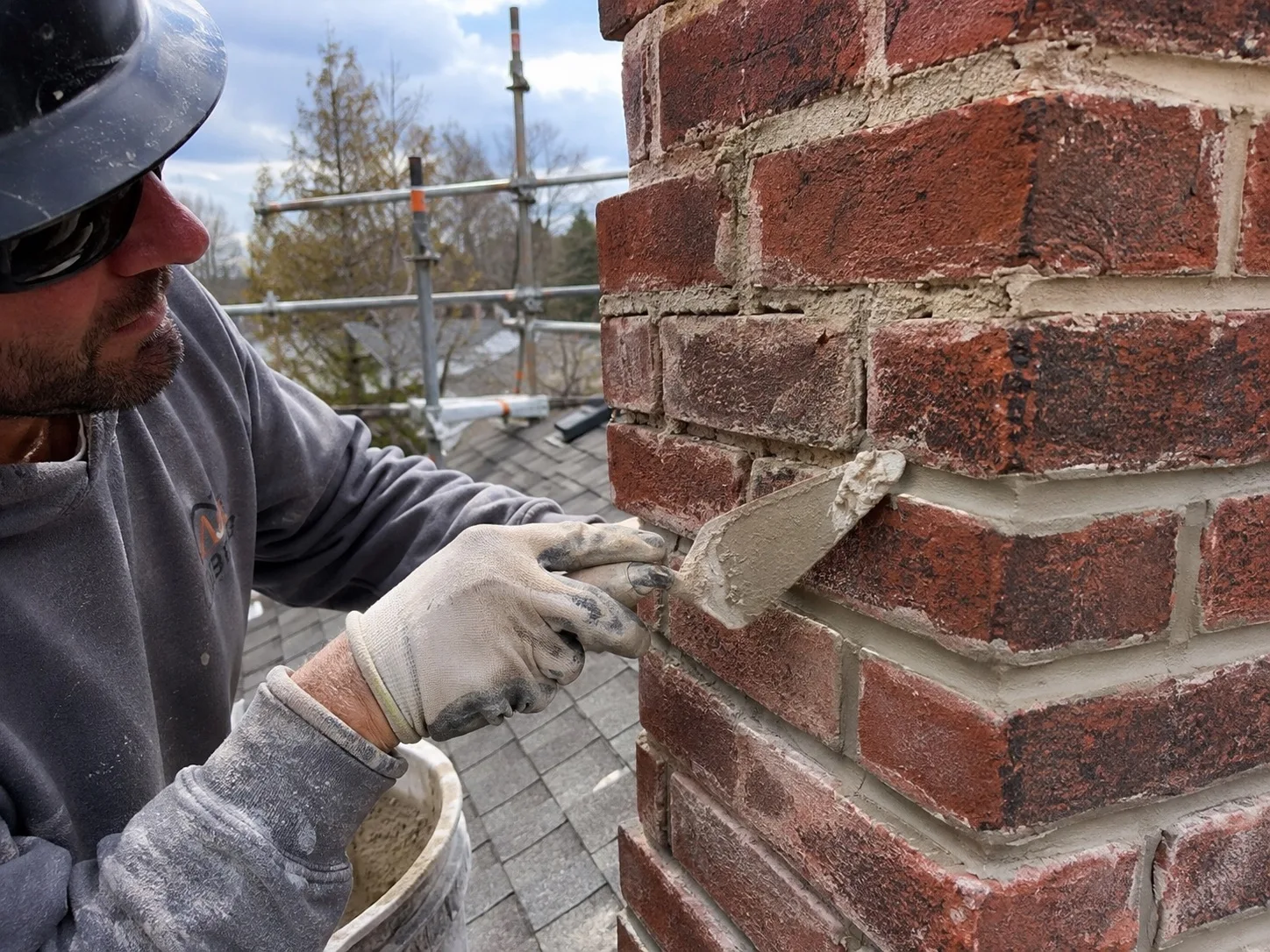
Deteriorated mortar joints ground out and refilled with mortar matched to the existing masonry.
Spalled brick replacement
Brick that has lost its face is replaced. Sealing over spalled brick just locks the moisture in.
Flashing repair
The metal junction where chimney meets roof is a leading leak point and is frequently the actual source of an interior stain.
Firebox and smoke chamber repair
Cracked firebrick, failed refractory mortar, and parged smoke chambers restored.
Waterproofing
Breathable vapour-permeable sealer applied after repairs, so masonry can dry outward instead of trapping moisture.
★ Warning signs
Signs you may need this
- Brick faces flaking, popping, or crumbling
- Mortar joints that are recessed, sandy, or missing
- Cracks visible in the concrete crown at the top
- Water stains on the ceiling or wall around the chimney
- Rusted damper, firebox, or fireplace components
- A visible lean, bulge, or gap where the chimney meets the house
Seeing more than one of these usually means the underlying issue has been developing for a while. It is worth having looked at rather than watched.
Why this is not worth deferring
Deferred chimney repair follows a predictable arc: minor crown crack, then water entry, then joint deterioration, then loose brick, then a stack that needs rebuilding from the roofline up. Each stage costs several times the one before it. Crown repair is inexpensive; a rebuild is not.
There is a safety dimension too. Water reaching the flue liner accelerates cracking, and a deteriorating stack is a masonry hazard above an occupied house. The repairs that look cosmetic are usually the ones holding the structure together.
★ South Florida
How chimneys fail in South Florida
Water still causes almost every masonry repair here. It simply arrives and behaves differently than it does in a cold climate.
Constant moisture instead of freeze-thaw
Elsewhere, water gets into masonry, freezes, expands, and breaks it apart. Here masonry simply stays wet. Mortar softens and erodes over time, salts migrate to the surface and leave efflorescence, and the deterioration is steadier and quieter than the seasonal damage up north.
Salt air on metal components
Chloride draws moisture out of the air and holds it against metal, so a salted surface near the coast is effectively never dry. Flashing, caps, chase covers, and dampers corrode years sooner than the identical parts a few miles inland. Replacing them in stainless rather than galvanized is usually the difference between a repair and a recurring problem.
Storm season
Wind lifts caps and flashing, driving rain finds every opening, and debris strikes the stack. Damage often shows up indoors as a ceiling stain weeks later, by which time water has been tracking through the structure for a while.
Crowns and flashing first
Because the failure mode here is water entry rather than frost damage, the crown and the flashing carry more of the burden than they do elsewhere. They are also the two things most often skipped when a chimney gets a cosmetic repair.
Prefab chases
Homes built here from the 1970s through the 2000s frequently have a framed chase clad in stucco, siding, or brick veneer rather than a solid masonry chimney. The metal chase cover on top is the weak point. When it rusts through, water enters the cavity and the damage stays hidden until it is extensive.
Sealing at the wrong moment
A breathable water repellent is genuinely useful on Florida masonry, but only after the entry points are closed. Applied over an active leak it traps moisture inside the wall and accelerates exactly the damage it was meant to prevent.
★ Our process
How we handle it
STEP 01
Find the water
Full exterior and interior assessment to identify where moisture is actually entering: crown, joints, flashing, or the flue itself.
STEP 02
Scope in priority order
What is structural, what is urgent, what can reasonably wait, with the reasoning laid out.
STEP 03
Repair
Crown, masonry, flashing, and firebox work carried out with materials matched to the existing chimney.
STEP 04
Seal and protect
Breathable waterproofing applied last, once the entry points are closed.
★ Why choose us
Why homeowners book this with Gold Star Chimney Sweep
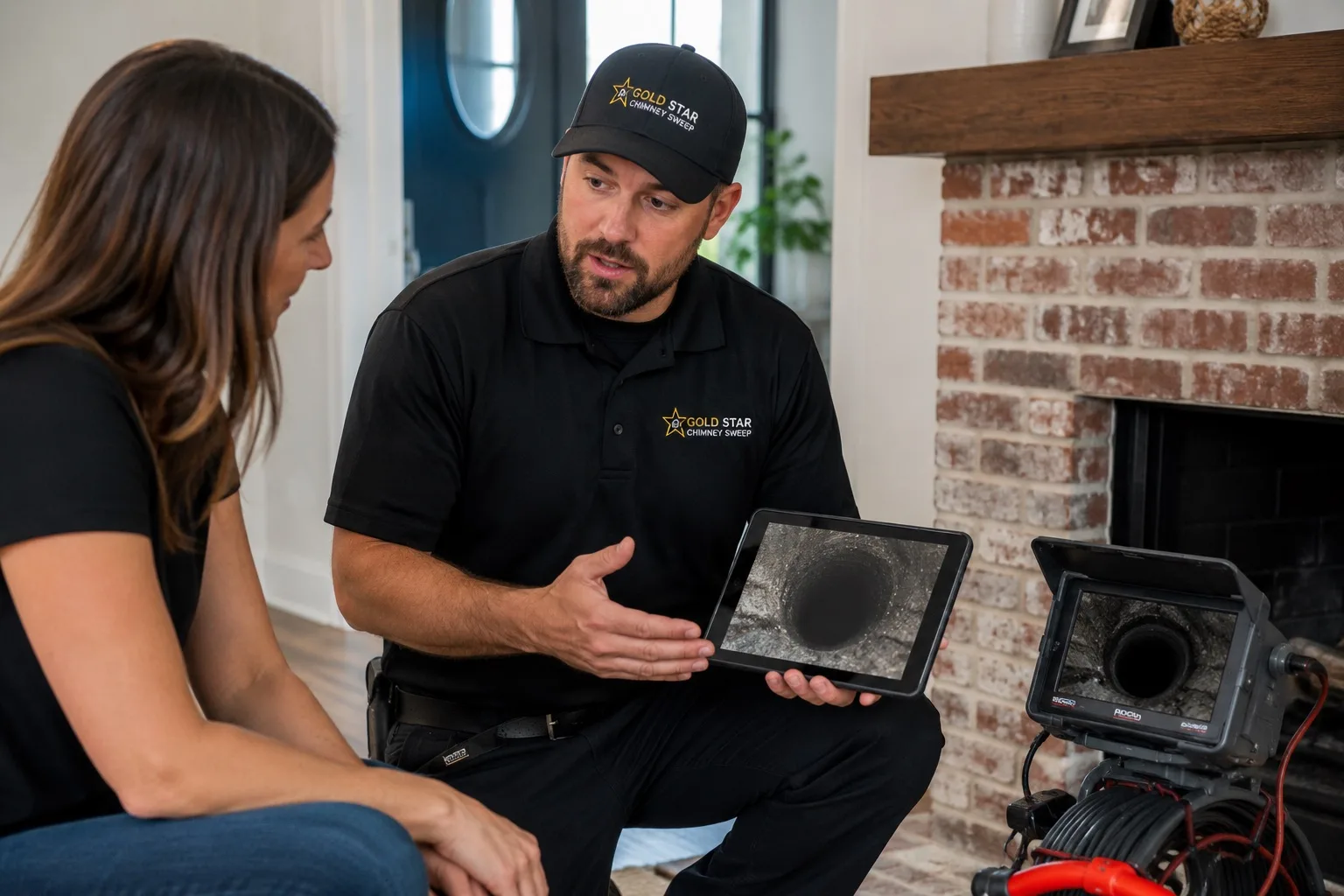
- The inspection comes first, so the recommendation has evidence behind it
- Photos of what we found, included in the written report
- Plain explanations, no jargon you have to nod along to
- Containment and floor protection on every interior visit
- Work priced by scope, written out rather than quoted verbally
- We are comfortable telling you nothing needs doing
★ Related services
Often needed alongside this
★ Questions
Chimney Repair FAQs
More on the full FAQ page.
It depends on how far the damage extends. Isolated spalling and a cracked crown are repairs. Widespread joint failure, a leaning stack, or masonry that has lost its bond through several courses usually means rebuilding from the roofline up. An inspection settles it.
Only if the leak is through the masonry face. If water is entering at the flashing or through a cracked crown, sealer traps it inside instead. Fix the entry point, then seal.
Brick and mortar are porous by design. They are meant to absorb water and release it. The system fails when the crown cracks, joints erode, or flashing lifts, and when a non-breathable sealer prevents drying.
Some of it. Mortar and crown work need temperatures above freezing to cure properly, so masonry is usually scheduled for milder weather. Diagnostic work, liners, and temporary protection can happen year-round.
Yes. Freeze-thaw is one mechanism, not the only one. Constant humidity keeps masonry saturated, salt attacks metal, and storm-driven rain finds openings. The result looks different from northern damage but the cause is the same: water getting somewhere it should not.
Yes. Chase repairs are common here. The usual work is replacing a rusted chase cover with a custom stainless one, resealing or replacing flashing, and repairing whatever cladding has been damaged by water tracking down inside the framing.
Where the work involves the crown, cap, flashing, or a chase cover, yes. Those are the components that fail under storm conditions, and they are the ones that let water into the structure once they do.
★ Next step
Need chimney repair?
Tell us what you are seeing and we will tell you whether chimney repair is the right next step, or whether something else is.