
★ Trusted since 2006Open 7 days a week, 7:00 AM–9:00 PM
★ Trusted since 2006Open 7 days a week, 7:00 AM–9:00 PM

★ Chimney Clog Removal
Chimney Clog Removal in South Florida
A blocked flue sends combustion gases back into the house instead of out of it. Clearing the obstruction, and finding out how it got there, is the whole job.
★ Overview
What chimney clog removal actually involves
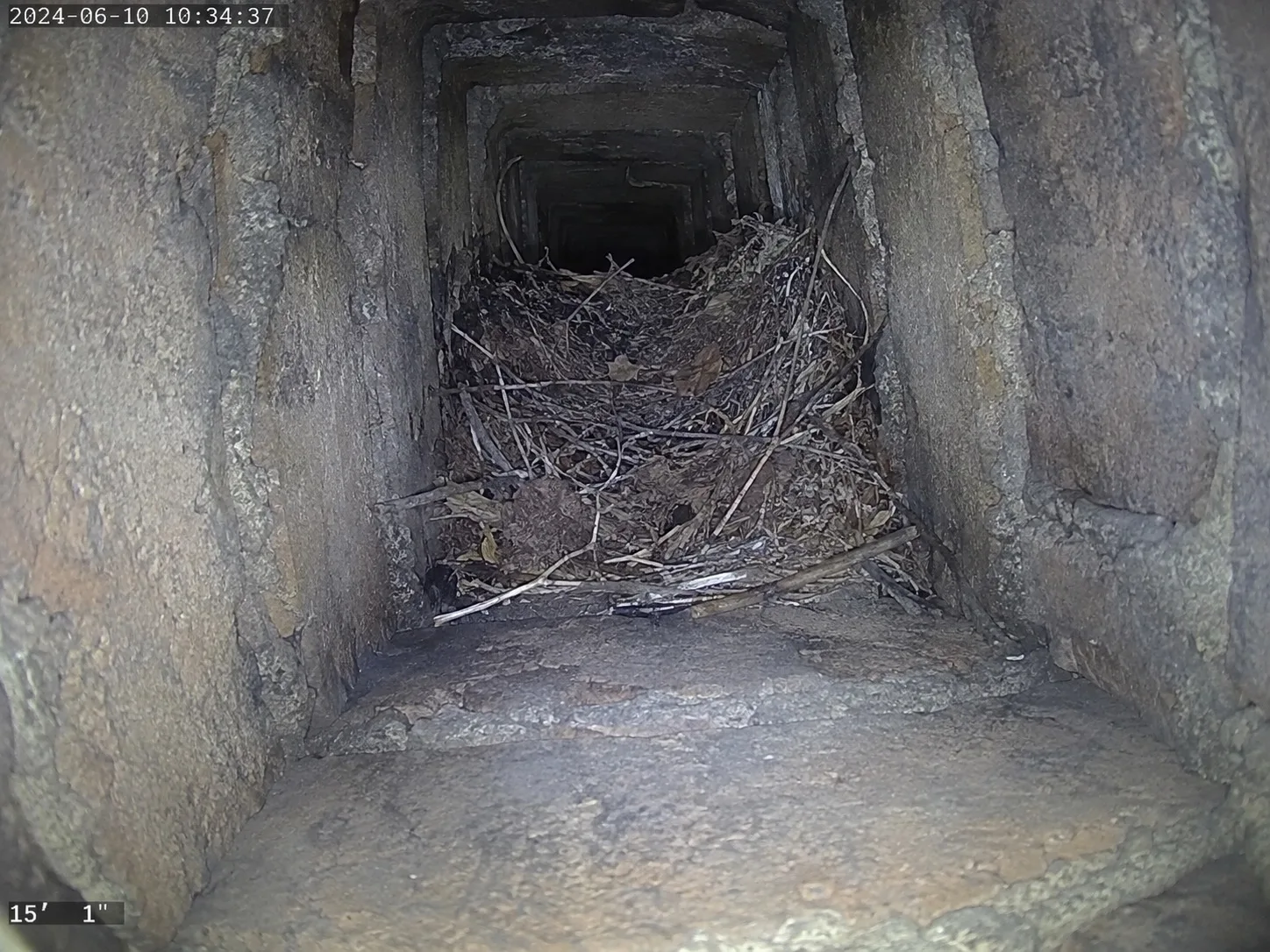
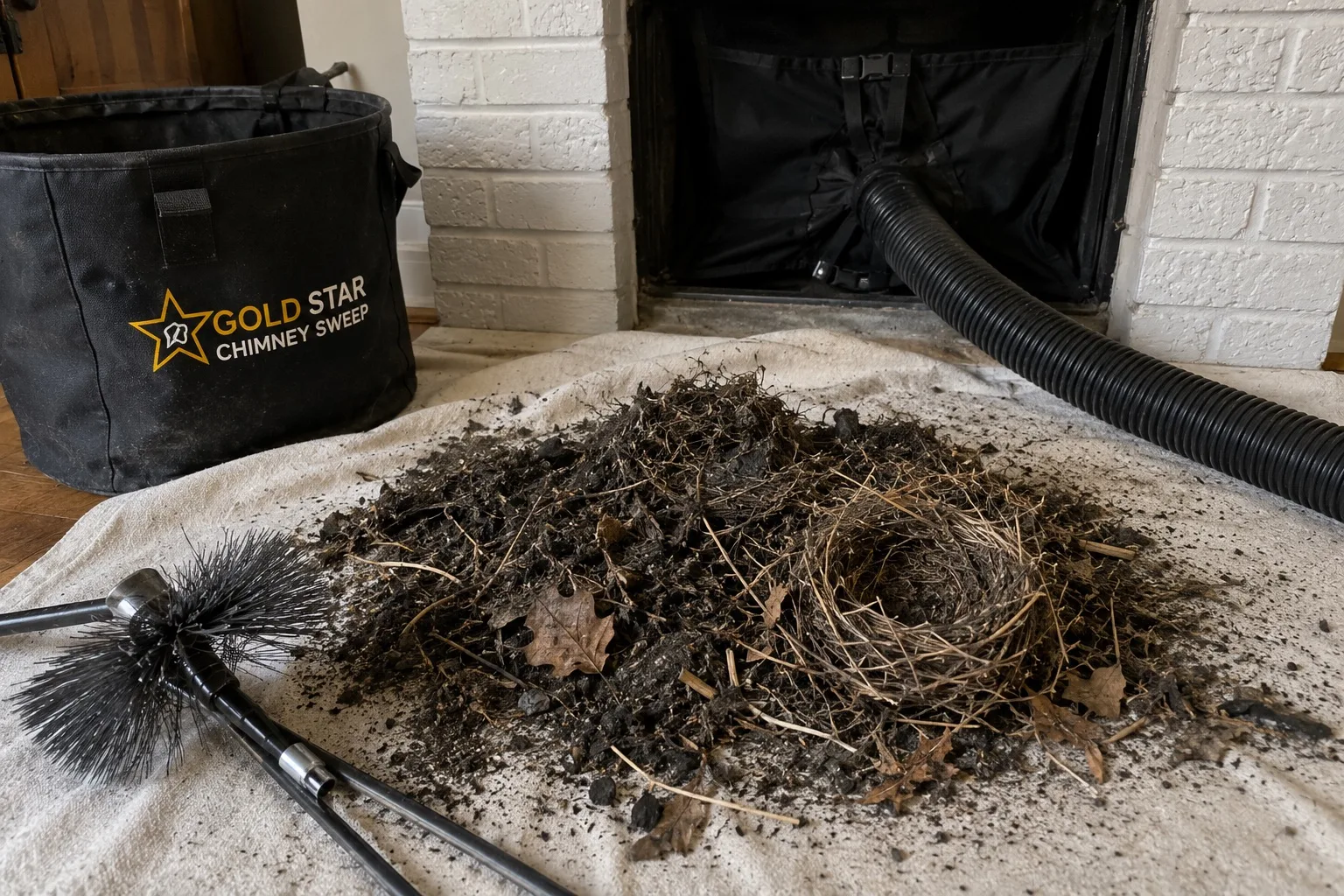
Chimney blockages are different from creosote buildup. Creosote accumulates slowly and evenly. A clog is a discrete object: a squirrel nest, a stack of leaves at the smoke shelf, a dead animal, a chunk of the crown that fell in, or collapsed clay tile that dropped and wedged.
The symptom that brings most people to this page is smoke coming back into the room, though a blockage is only one of several reasons that happens. That is the visible version. The invisible version is a gas or oil appliance venting into a blocked flue, where the exhaust has nowhere to go and carbon monoxide is the result. If you have CO alarms sounding, leave and call the fire department first.
Clearing the obstruction is straightforward. Working out why the flue was open to the outside in the first place is the part that keeps it from repeating.
★ Scope of work
What is included
Locate the blockage
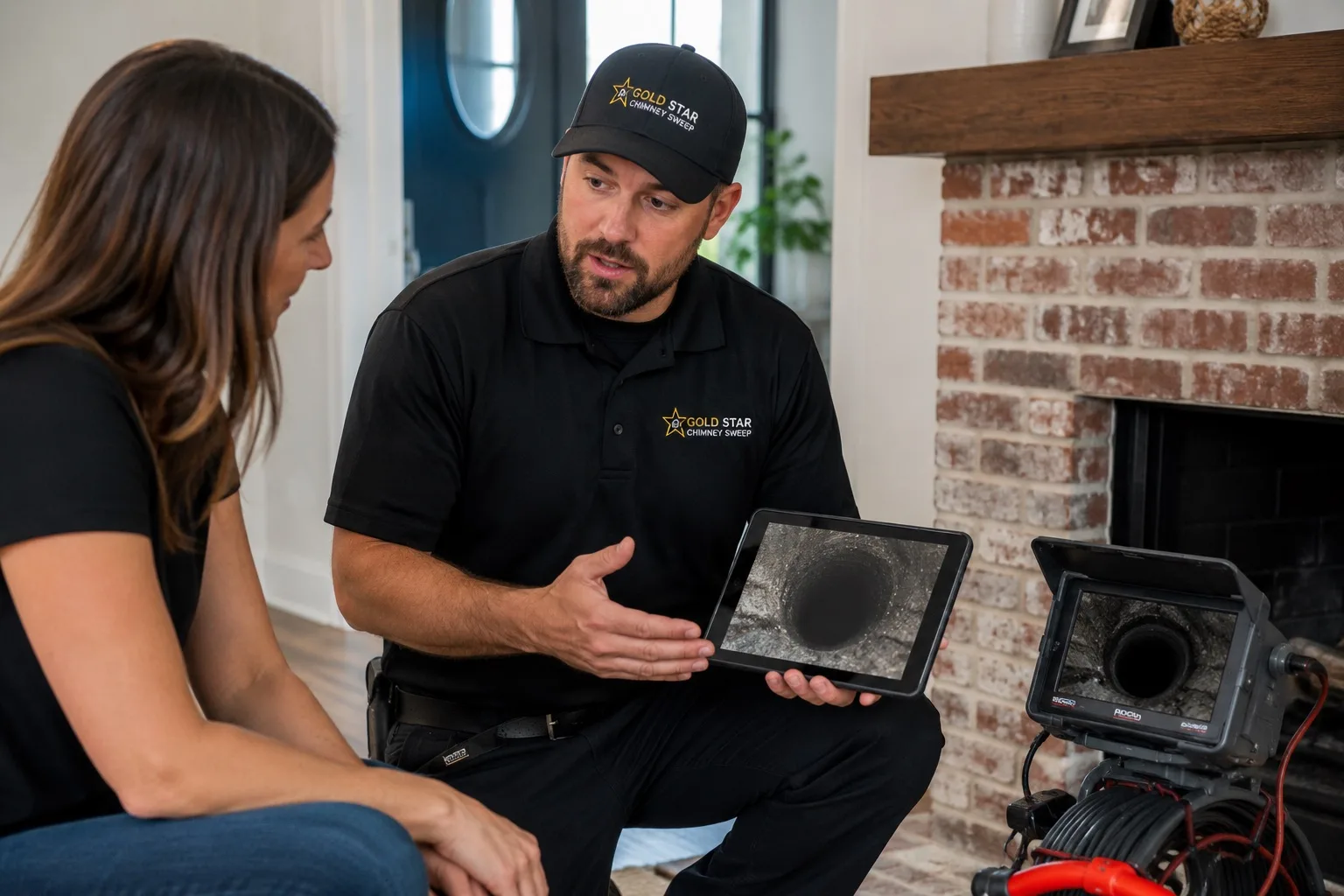
Camera inspection down the flue to find what is in there and where, before anything is disturbed.
Identify the material
Nesting material, leaf debris, fallen tile, and crown fragments each need a different approach and tell you different things about the chimney.
Clear and extract
Removed through the cleanout or firebox with containment in place, not pushed further down.
Check for damage behind it
Fallen masonry means something failed above. We look at what released and whether it is still moving.
Verify draft
The flue is tested after clearing so you know the system is actually venting.
Prevent recurrence
Usually a properly fitted cap. Sometimes crown or liner work, if the debris came from the chimney itself.
★ Warning signs
Signs you may need this
- Smoke pushing back into the room when the fireplace is lit
- Scratching, chirping, or fluttering sounds inside the chimney
- A strong odour with no fire burning
- Debris, twigs, or nesting material in the firebox
- A carbon monoxide alarm activating near a gas or oil appliance
- A fireplace that suddenly drafts far worse than last season
Seeing more than one of these usually means the underlying issue has been developing for a while. It is worth having looked at rather than watched.
Why this is not worth deferring
Every fuel-burning appliance depends on the flue staying open. When it does not, exhaust takes the next available path, which is into the living space. With a wood fire you at least see the smoke. With a gas furnace or water heater venting into the same stack, there is nothing to see.
There is a structural angle too. Debris that fell from inside the chimney is evidence: a crown breaking apart, a liner failing, mortar joints letting go. Clearing it without asking where it came from means the next piece is already on its way down.
★ South Florida
What blocks chimneys in South Florida
The blockages we clear here are mostly organic, and they arrive all year rather than in one season.
A long nesting season
Without a hard winter, nesting activity continues across much of the year. An open flue is dry, sheltered, and out of reach of predators, which makes it attractive for longer here than it would be further north.
Canopy debris
Leaves, seed pods, small branches, and palm fronds shed continuously. They accumulate on the smoke shelf, and because there is no seasonal burning to reveal the problem, the first sign is often smoke in the room months later.
Storm debris
High winds put material into open flues that would never normally get there, and can also dislodge the cap that was keeping it out. Two problems from one event.
Corroded screens
Prefab chase covers include a screen across the flue opening. In salt air those screens corrode away, and once the screen is gone the opening is unrestricted. Homeowners often assume they are still protected because the cover is visibly there.
Fallen masonry
Where the crown or the liner has been deteriorating quietly under constant moisture, pieces eventually drop into the flue. That is worth distinguishing from a nest, because it means something above is failing and the next piece is already coming.
Appliances that share the flue
Where a water heater or furnace vents into the same stack, a blockage stops being a smoke problem. That exhaust is invisible, so there is no warning of the kind a wood fire gives you.
★ Our process
How we handle it
STEP 01
Assess safely
We ask what you have noticed, check appliances venting into the stack, and rule out an active hazard first.
STEP 02
Camera the flue
Locating the obstruction visually avoids guessing and avoids forcing debris into a worse position.
STEP 03
Clear the obstruction
Removed with containment at the firebox so the mess stays in the equipment.
STEP 04
Test and prevent
Draft confirmed, cause identified, and a recommendation for keeping the flue closed to the outside.
★ Why choose us
Why homeowners book this with Gold Star Chimney Sweep
- The inspection comes first, so the recommendation has evidence behind it
- Photos of what we found, included in the written report
- Plain explanations, no jargon you have to nod along to
- Containment and floor protection on every interior visit
- Work priced by scope, written out rather than quoted verbally
- We are comfortable telling you nothing needs doing
★ Related services
Often needed alongside this
★ Questions
Chimney Clog Removal FAQs
More on the full FAQ page.
Animal nests and windblown leaf debris account for a large share. After that it is fallen masonry: crown fragments or sections of clay liner that cracked and dropped.
Yes, particularly when a gas or oil appliance vents into the same flue, because a blockage can push carbon monoxide back into the house. Wood-fire blockages announce themselves with smoke; appliance flues do not.
We assess the situation and handle removal where it is appropriate to do so. Some species and some seasons are subject to state wildlife protections, and we will tell you plainly if a licensed wildlife operator is the right call.
Not on its own. An uncapped flue that attracted a nest will attract another. Clearing plus capping is what actually resolves it.
Nesting material and windblown vegetation account for most of it, and both arrive year-round in this climate. After that it is fallen masonry from a deteriorating crown or liner, and storm debris.
On prefab systems the screen across the chase cover opening corrodes away long before the cover itself looks finished. The cover appears intact from the ground while the opening underneath is effectively wide open.
They are more likely, not less. Nothing disturbs the flue, so material accumulates undisturbed. Plenty of the worst blockages we clear are in fireplaces that have not been lit in years.
★ Next step
Need chimney clog removal?
Tell us what you are seeing and we will tell you whether chimney clog removal is the right next step, or whether something else is.